


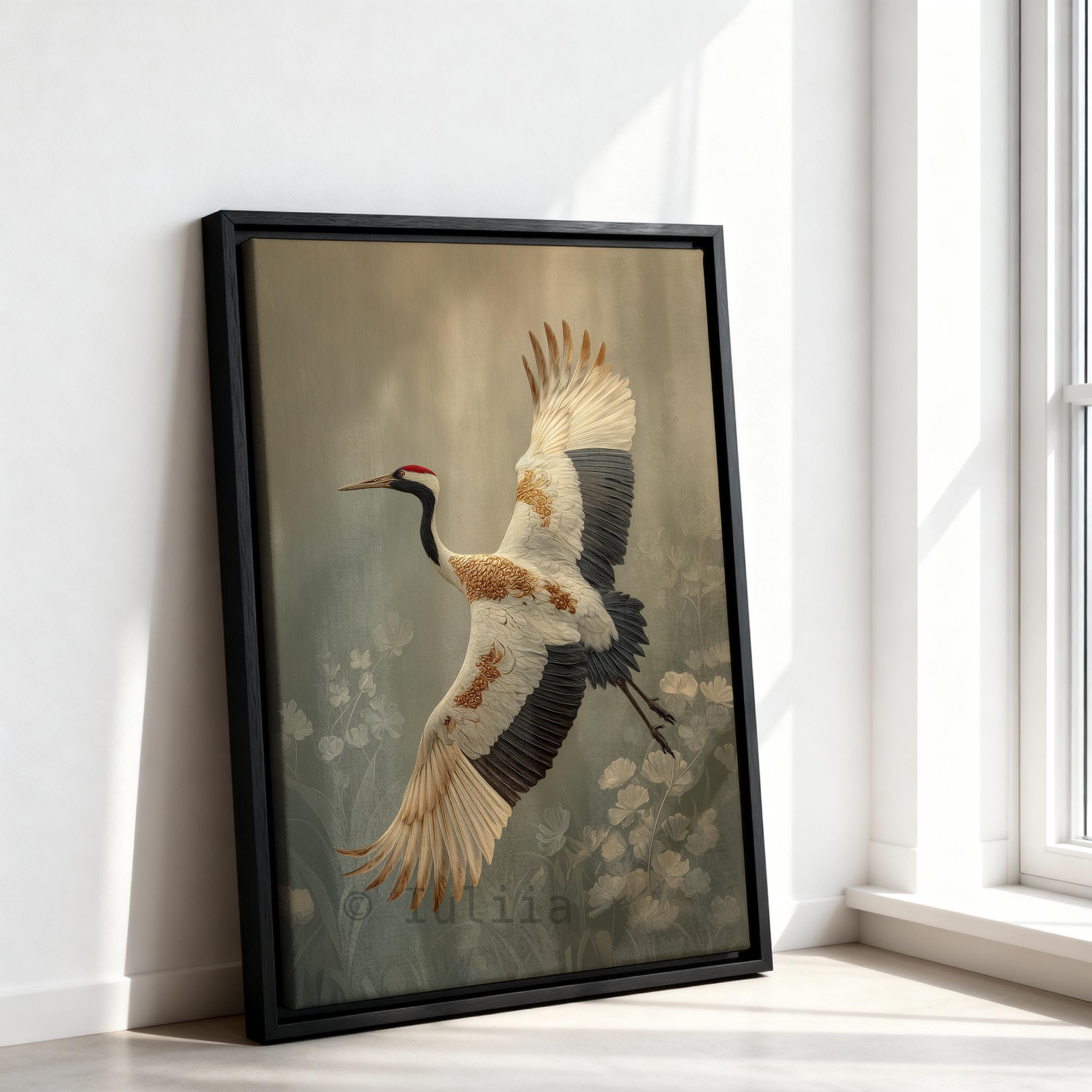
Japanese crane wall art is admired for its visual grace, but its appeal goes far deeper than aesthetics. Cranes hold powerful symbolic meaning in Japanese culture, making them one of the most enduring and respected motifs in both traditional and contemporary art.
Unlike purely decorative subjects, cranes carry cultural weight. When used in wall art, they introduce not only beauty, but also intention, symbolism, and a sense of quiet sophistication into an interior.
The Symbolism of Cranes in Japanese Culture
In Japanese culture, the crane is a symbol of longevity, peace, and good fortune. According to tradition, cranes are believed to live for a thousand years, which is why they are often associated with endurance and spiritual strength.
Cranes also represent harmony and balance. Their calm presence and controlled movement reflect ideals deeply rooted in Japanese philosophy, including respect for nature and the acceptance of time and impermanence.
When cranes are depicted in pairs, their symbolism expands further. Paired cranes are traditionally associated with loyalty, lasting relationships, and balance between two forces — making such imagery especially meaningful in shared living spaces.
Why Cranes Translate So Well Into Wall Art
From a visual perspective, cranes are exceptionally well-suited for wall art. Their long legs, extended necks, and wide wings create elegant lines that feel natural rather than forced.
This linear grace works particularly well in horizontal and panoramic compositions, where space and flow are essential. Cranes guide the viewer’s eye across the artwork, reinforcing a sense of movement without visual tension.
Unlike many animals, cranes do not rely on expressive faces or dramatic gestures. Their beauty lies in posture and proportion, which aligns perfectly with minimalist and modern interior aesthetics.
Elegance Without Visual Noise
Japanese crane wall art rarely feels decorative in the conventional sense. It avoids excessive detail, bold color contrasts, or ornamental overload.
Instead, it relies on composition, spacing, and subtle contrast. Empty space is used intentionally, allowing the artwork to breathe and giving the subject presence without domination.
This restrained approach makes crane wall art ideal for interiors that prioritize calm and balance over visual stimulation.
The Role of Negative Space in Crane Artwork
Negative space is a fundamental element of Japanese visual language. In crane wall art, empty areas are not accidental — they are part of the composition.
This use of space enhances the sense of calm and allows the cranes themselves to feel grounded and purposeful. In interiors, this translates to artwork that supports the room rather than competing with it.
Perfect Placement for Crane Wall Art
Because of its balanced and symbolic nature, crane artwork works especially well in spaces where atmosphere matters.
- Living rooms, where it can act as a refined focal point without overpowering the space
- Bedrooms, where its symbolism of peace and longevity supports rest and relaxation
- Long walls and panoramic layouts, where the cranes’ natural movement enhances horizontal flow
- Japandi and Asian-inspired interiors, where cultural coherence is essential
Why Japanese Crane Art Feels Timeless
Many decorative trends fade because they are tied to a specific era or aesthetic. Japanese crane imagery does not.
Its symbolism is cultural rather than fashionable, and its visual language is rooted in proportion and restraint. This allows crane wall art to remain relevant even as furniture styles, color trends, and materials change.
In modern interiors, this timelessness is especially valuable. The artwork continues to feel intentional rather than outdated.
Timeless Appeal Across Interior Styles
Japanese crane wall art adapts easily across a wide range of interiors.
In minimalist spaces, it adds meaning without clutter. In more layered interiors, it provides a calm counterbalance to texture and material richness.
This flexibility is one of the reasons crane imagery remains consistently popular in contemporary wall art collections.
Conclusion
Japanese crane wall art combines cultural depth with visual elegance in a way few subjects can.
Its symbolism of peace, longevity, and balance, paired with refined composition and restraint, makes it a timeless choice for meaningful modern interiors.