

Japanese-inspired wall art has become a cornerstone of modern interior design. In a world increasingly filled with visual noise, this style offers something rare: calm, balance, and intention.
Rather than following short-lived trends, Japanese-inspired art draws from centuries-old aesthetic principles that continue to feel relevant in contemporary homes.
The Core Principles of Japanese Aesthetics
Japanese-inspired wall art is rooted in concepts such as balance, restraint, and harmony with nature. These principles influence not only what is shown, but what is intentionally left out.
Negative space plays a crucial role. Instead of filling the wall, the artwork allows space to breathe, creating a sense of openness and quiet.
Why Japanese-Inspired Wall Art Feels Timeless
Unlike decorative styles that rely on bold colors or graphic statements, Japanese-inspired art avoids visual excess.
This restraint is precisely why it does not age. The compositions remain relevant regardless of changing furniture trends, color palettes, or architectural styles.
The Role of Nature in Japanese-Inspired Art
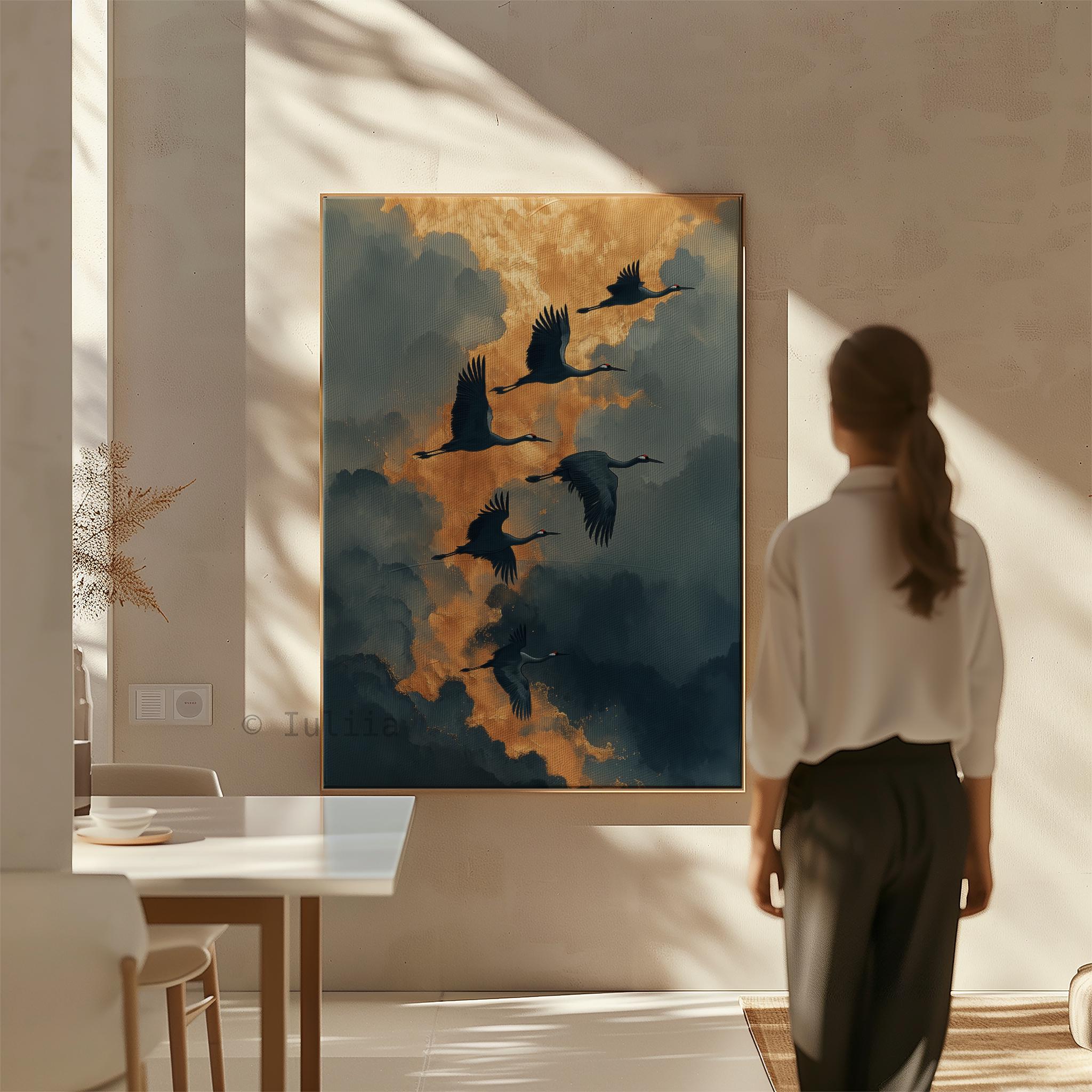
Nature is central to Japanese visual culture. Clouds, water, mountains, birds, and seasonal elements appear frequently, not as decoration but as symbols of impermanence and balance.
In wall art, these motifs ground the interior and create a subtle emotional connection between the home and the natural world.
Minimalism With Emotional Depth
Japanese-inspired wall art proves that minimalism does not mean emptiness.
Through texture, soft movement, and controlled contrast, the artwork carries depth without visual clutter. This makes it especially suited for living rooms and bedrooms where atmosphere matters more than decoration.
Ideal Interiors for Japanese-Inspired Wall Art
This style integrates seamlessly into:
- Modern and minimalist interiors
- Japandi and Scandinavian spaces
- Calm bedrooms and meditation areas
- Homes designed around natural materials
Conclusion
Japanese-inspired wall art remains timeless because it is built on principles, not trends.
By emphasizing balance, nature, and intentional simplicity, it creates interiors that feel calm, grounded, and enduring.