

What Wall Art Is Best for a Kitchen? How to Choose Prints, Colors and Decor That Make the Room Look Finished
Kitchen wall art is often treated as an afterthought, but it can completely change how the room feels. A kitchen is not only a functional space for cooking. It is also a place for morning routines, family conversations, casual meals, and everyday rituals.
The best kitchen wall art adds warmth, color, and personality without making the room feel cluttered. It should connect with the style of the kitchen, the color palette, and the feeling you want the space to have.
For modern interiors, kitchen wall art can include food prints, fruit artwork, still life wall art, floral vase compositions, seafood prints, abstract modern pieces, botanical artwork, or colorful dining-inspired scenes.
If you are searching for kitchen wall decor ideas modern, modern kitchen wall art, or meaningful artwork for kitchen spaces, the best approach is to choose pieces that feel decorative, intentional, and connected to everyday home life rather than generic kitchen signs.
What wall art is best for a kitchen?
The best wall art for a kitchen is artwork that feels connected to food, gathering, warmth, or everyday home life. It does not always need to show food directly, but it should feel natural in a kitchen or dining environment.
Strong choices include fruit prints, citrus wall art, tomato artwork, sardine prints, lobster art, floral still life, vase wall art, botanical compositions, café-inspired prints, and colorful table scenes.
Modern kitchen and dining wall art works especially well when it adds character without relying on generic kitchen signs or overused quotes.
What type of art looks good in a kitchen?
Art that looks good in a kitchen usually has one of three qualities: warmth, freshness, or visual appetite.
Fruit, flowers, seafood, plants, ceramics, bowls, bottles, and table scenes feel natural because they relate to food, gathering, and domestic life. This is why still life artwork has always worked well in kitchens.
However, modern kitchen art does not need to look traditional. Graphic illustrations, bold color blocks, playful patterns, and contemporary still life prints can make the kitchen feel more current and personal.
Should kitchen art be abstract or realistic?
Kitchen art can be abstract or realistic, but the best choice depends on the room.
Realistic or semi-realistic artwork can work well if you want a traditional, rustic, vintage, or Mediterranean feeling. It often feels familiar and easy to understand.
Abstract or graphic kitchen art works better in modern, colorful, eclectic, or maximalist interiors. It can suggest food, flowers, table scenes, or movement without looking too literal.
If your kitchen already has many visual details, choose simpler artwork. If your kitchen is neutral or minimal, bolder art can bring the room to life.
How do I choose wall art for my kitchen?
Start with the mood of the kitchen. Do you want it to feel calm, colorful, Mediterranean, modern, cozy, playful, or elegant?
Then look at the existing colors in the room: cabinets, backsplash, countertops, wood tones, ceramics, rugs, and dining furniture.
The safest method is to choose artwork that repeats one or two colors already present in the kitchen. This makes the art feel intentional rather than random.
For example, citrus artwork can connect with yellow or orange accents. Seafood wall art can support blue, cream, or coastal tones. Floral still life prints can soften kitchens with hard surfaces or strong lines.
Can you put wall art in the kitchen?
Yes, you can absolutely put wall art in the kitchen. The key is choosing the right placement and avoiding areas where heat, steam, grease, or water can damage the artwork.
Good kitchen wall art placements include breakfast nooks, dining corners, open wall sections, shelves, side walls, pantry areas, or walls near but not directly above the stove or sink.
If the kitchen has limited wall space, smaller prints or a narrow vertical artwork can work well. If the kitchen opens into a dining area, larger artwork or a set of prints can create a stronger focal point.
Where should you not hang pictures on the wall?
In a kitchen, avoid hanging artwork directly above a stove, very close to a sink, or in any place exposed to constant steam, grease, or splashes.
Even high-quality prints and canvas pieces need sensible placement. Kitchen art should be visible, but protected from everyday cooking damage.
Better locations include side walls, dining areas, breakfast nooks, or spaces above sideboards and small console tables.
How to display art in the kitchen?
Kitchen art can be displayed in several ways depending on the layout of the room.
- Hang one medium artwork on a blank wall.
- Use a set of 2 or 3 prints above a dining bench or breakfast nook.
- Place framed art on a shelf for a casual layered look.
- Use colorful still life art to brighten a neutral kitchen.
- Choose seafood, fruit, or floral prints for a café or Mediterranean atmosphere.
The most important rule is proportion. Very small art can look weak on a large wall, while oversized artwork may feel too heavy in a small kitchen.
What should I hang on my kitchen walls?
Good options for kitchen walls include still life prints, food wall art, fruit art, floral vase artwork, botanical prints, seafood art, café-style illustrations, colorful abstract pieces, and framed dining-inspired scenes.
If you want something more refined than standard kitchen signs, choose artwork that feels like real decor rather than obvious kitchen decoration.
Still life wall art is especially useful because it can include food, flowers, vases, ceramics, table settings, and decorative objects without being limited to one theme.
What looks good on kitchen walls?
Kitchen walls look good with artwork that adds warmth and visual interest without creating clutter.
Some of the strongest options are:
- Fruit wall art for freshness and color
- Citrus prints for sunny kitchen accents
- Sardine and seafood wall art for Mediterranean or coastal kitchens
- Floral still life for softness and charm
- Vase and botanical prints for a modern decorative look
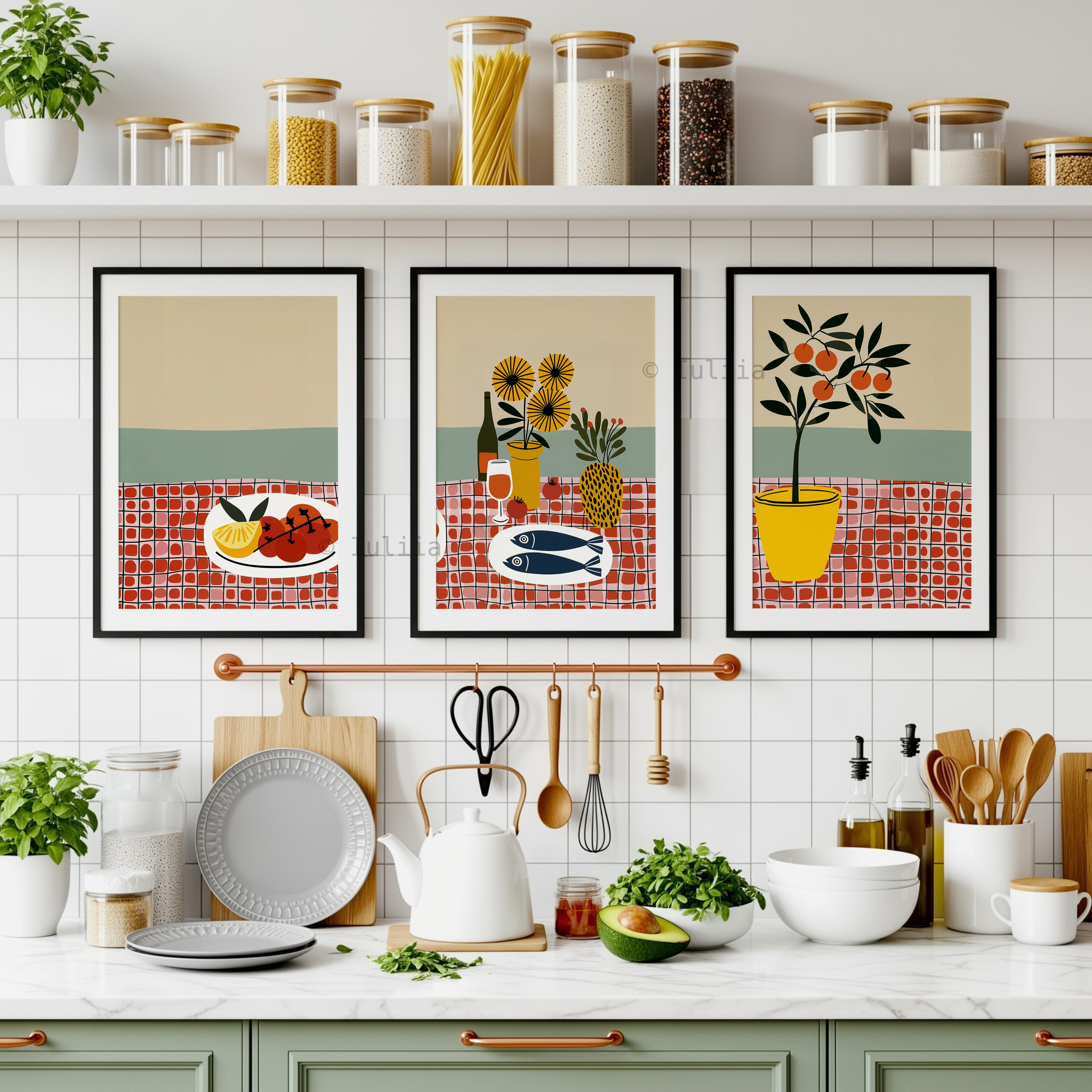
- Set of 3 wall art for wider kitchen or dining walls
- Abstract modern artwork for contemporary spaces
The right choice depends on whether the kitchen needs more color, softness, structure, or personality.
Modern Kitchen Wall Decor Ideas
Modern kitchen wall decor does not need to be cold or minimal. Some of the best modern kitchen wall art uses warm colors, food-inspired subjects, still life compositions, botanical details, seafood artwork, or abstract shapes that feel connected to cooking and gathering.
For small kitchen wall decor ideas modern enough for compact spaces, choose one focused print, a narrow vertical artwork, or a small framed still life on a shelf. In a larger kitchen or open dining area, a bold statement print or set of 3 artworks can make the space feel more finished.
What are people putting on their kitchen walls?
People are moving away from generic “eat” signs and mass-produced kitchen quotes. Instead, they are choosing artwork that feels more personal and interior-focused.
Popular kitchen wall decor now includes still life prints, colorful food art, Mediterranean-inspired kitchen art, vintage café posters, abstract modern prints, botanical artwork, ceramic-inspired imagery, and playful maximalist compositions.
This shift makes kitchens feel less like purely functional rooms and more like designed living spaces.
What kind of art looks good in a kitchen?
Art that looks good in a kitchen usually has a strong connection to daily life. It can show food, flowers, plants, vessels, seafood, fruit, drinks, table scenes, or decorative objects.
But it can also be more abstract if the colors and mood work well with the space.
For example, a colorful abstract still life can feel more modern than a traditional food painting while still fitting the kitchen perfectly.
What colors should not be used in a kitchen?
There are no strict forbidden colors, but some choices can make a kitchen feel colder, smaller, or less inviting if used poorly.
Flat gray, harsh black, overly muddy brown, or very cold blue can make some kitchens feel dull if there is no warmth to balance them.
For wall art, the better approach is to choose colors that bring life into the room: warm neutrals, cream, terracotta, red, yellow, olive, blue, coral, soft pink, or citrus tones.
What colors make a kitchen look expensive?
A kitchen often looks more expensive when the color palette feels intentional.
Warm neutrals, muted greens, deep blues, terracotta, cream, black accents, brass tones, and rich earthy colors can create a more polished effect.
Wall art can help achieve this without changing cabinets or countertops. A print that repeats existing tones in the room can make the kitchen feel more designed and cohesive.
What makes a kitchen look classy?
A kitchen looks classy when the elements feel connected rather than random.
This does not mean everything has to be neutral or expensive. Even colorful kitchen wall art can look elegant if the palette is controlled and the artwork has a strong composition.
A classy kitchen usually avoids clutter, poor proportions, cheap-looking signs, and too many unrelated colors. One good artwork can often do more than several small decorations.
What makes kitchens look cheap?
Kitchens can look cheap when the decor feels generic, cluttered, or poorly scaled.
Common problems include tiny artwork on a large wall, too many signs with obvious text, random colors that do not connect to the room, and decor placed without a clear focal point.
Choosing better kitchen wall art can immediately improve the space. A strong still life print, colorful food artwork, or set of 3 dining prints can make the room feel more intentional.
How to decorate a plain wall in a kitchen?
A plain kitchen wall can be decorated with one strong artwork, a small gallery arrangement, shelves with framed prints, or a set of 3 wall art if the wall is wide.
If the kitchen is neutral, choose artwork with color or pattern. If the room already has a busy backsplash or strong cabinet color, choose calmer artwork that supports the palette.
The goal is to create a focal point without adding visual clutter.
How to jazz up a boring kitchen?
The fastest way to make a boring kitchen feel more interesting is to add color, texture, and personality.
Wall art is one of the easiest ways to do this because it does not require renovation.
Colorful fruit prints, seafood art, floral still life, abstract modern kitchen art, or a bold set of 3 prints can change the mood of the room quickly.
How to use dead space in a kitchen?
Dead space in a kitchen can often become a good place for artwork.
Look for empty side walls, small corners, areas near dining benches, the wall above a sideboard, or space around open shelving.
A vertical print can work in a narrow gap, while a horizontal set of prints can work above a bench or dining table.
Is abstract wall art still in style for kitchens?
Yes, abstract wall art is still in style, including in kitchens.
The strongest abstract kitchen art usually has warmth, shape, and color that connect to the room. It should not feel like random office decor.
Abstract modern wall art can work beautifully in kitchens when it feels graphic, colorful, organic, or still-life-inspired.
What is the difference between realistic art and abstract art for kitchens?
Realistic art shows recognizable subjects clearly. Abstract art uses shape, color, line, and composition without needing to represent the subject literally.
For kitchens, realistic art can feel traditional and familiar. Abstract art can feel more modern and expressive.
Both can work. The better choice depends on the kitchen style and the atmosphere you want to create.
What is the 2/3 rule for wall art?
The 2/3 rule means that artwork should usually cover about two-thirds of the width of the furniture beneath it.
For kitchen and dining spaces, this rule is useful above benches, sideboards, dining tables, or console areas.
If the artwork is too small, it can look disconnected. If it is too large, it may overpower the space.
What is the 50/50 rule in art?
In wall decor, the 50/50 rule is less commonly used than the 2/3 rule, but it can refer to visual balance between artwork and surrounding space.
For kitchens, avoid filling every wall. Leave breathing room so the artwork can stand out.
A kitchen with one strong focal point often looks more polished than one filled with many small, unrelated decorations.
What is the 3-5-7 rule in decorating?
The 3-5-7 rule suggests that odd numbers often look more natural in decorating.
This is why groups of 3, 5, or 7 objects can feel visually pleasing. For wall art, a set of 3 prints often works well because it creates rhythm and balance.
In kitchens and dining rooms, set of 3 wall art can work beautifully above a table, bench, sideboard, or long empty wall.
Conclusion
The best wall art for a kitchen depends on the room, but the strongest choices usually add warmth, personality, and visual connection.
Fruit prints, still life wall art, floral vase compositions, seafood artwork, botanical pieces, abstract modern prints, and colorful dining scenes all work well when chosen with intention.
Instead of using generic kitchen signs, choose artwork that makes the kitchen feel like part of the home’s overall design.
Good kitchen wall art does more than fill a blank wall. It helps the room feel finished, personal, and visually alive.