


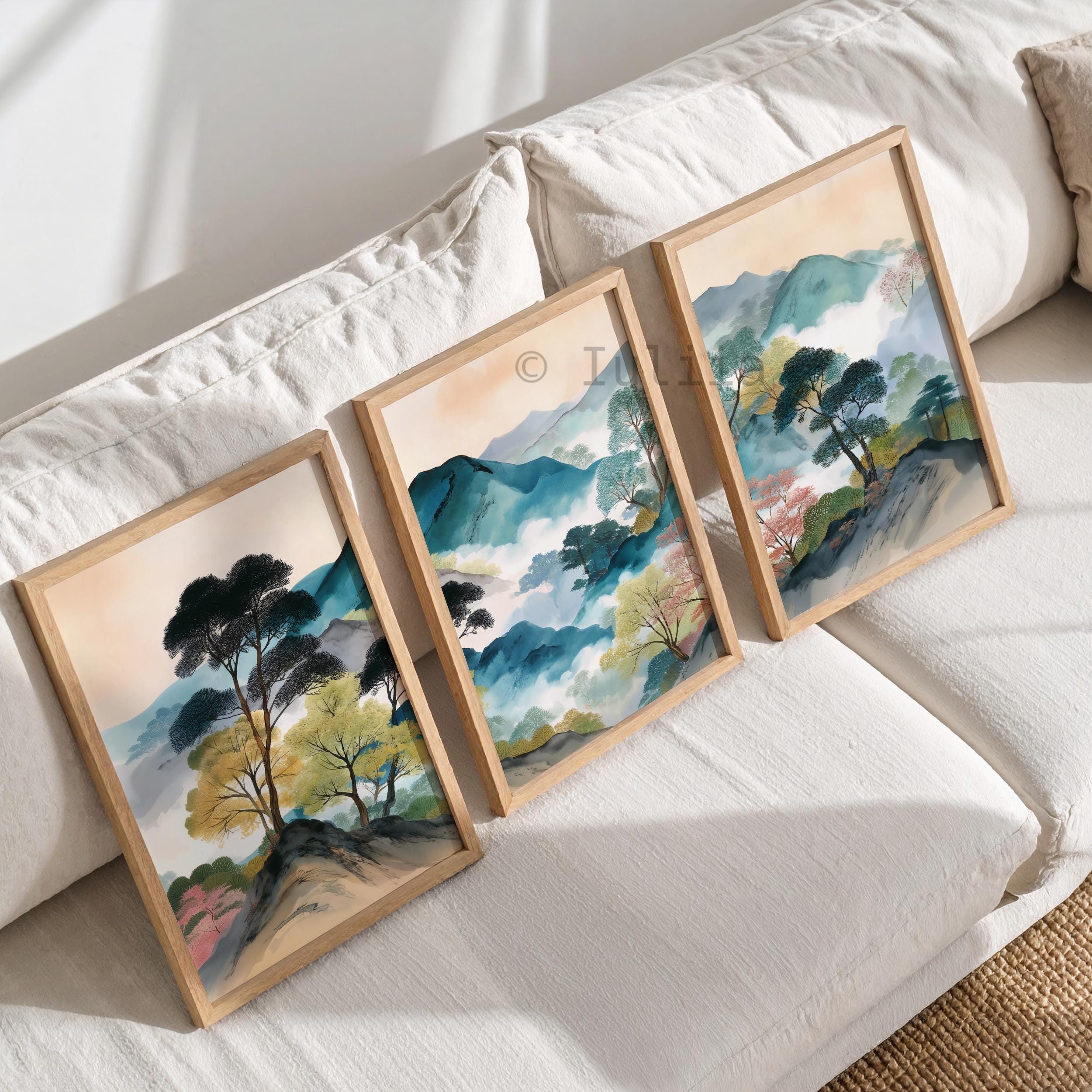
For many years, gallery walls were one of the most popular ways to decorate interiors. Multiple smaller frames arranged together created visual interest and allowed people to display several artworks at once. However, modern interior design has shifted significantly. Today, oversized wall art is increasingly preferred because it creates clarity, balance, and a stronger visual impact.
Both approaches can work, but they serve different purposes. Understanding how oversized wall art and gallery walls affect perception, proportion, and spatial balance helps determine which is the better choice for contemporary homes.
The Gallery Wall Approach: Flexibility and Complexity
Gallery walls offer flexibility. They allow multiple artworks to coexist and create layered visual storytelling. This approach can work well in eclectic interiors or smaller transitional spaces like hallways and staircases.
However, gallery walls also introduce complexity. Each frame competes for attention, and the overall composition depends heavily on precise spacing, alignment, and color coordination. Without careful planning, gallery walls can easily feel cluttered or visually unstable.
Instead of creating calm, they can introduce fragmentation, especially in modern interiors that emphasize clean lines and open space.
Oversized Wall Art Creates Immediate Visual Stability
Oversized wall art solves this problem by simplifying the visual structure of the room. Instead of multiple focal points, there is one dominant composition that anchors the entire wall.
This clarity helps the brain process the space more easily. The eye naturally settles on the artwork, creating a sense of order and intentional design.
As a result, rooms with oversized wall art often feel more complete and professionally designed compared to spaces filled with many smaller pieces.
The Psychological Impact of Scale
Scale plays a crucial role in how interiors are perceived. Larger artwork creates confidence and stability, while smaller artwork can feel tentative or incomplete when placed on large walls.
Oversized wall art communicates intention. It signals that the composition was chosen deliberately to define the space, not simply to fill empty areas.
This psychological effect is one of the main reasons oversized art is associated with modern and high-end interiors.
Triptych and Multi-Panel Sets as Oversized Wall Art
Set of 3 canvas artworks, also known as triptych wall art, function as oversized compositions even though they are divided into panels.
The panels work together as a single visual unit, creating a continuous flow across the wall. This allows triptych sets to deliver the same impact as a single oversized canvas while adding rhythm and architectural structure.
This format is especially effective above sofas and beds, where the horizontal layout reinforces the furniture’s proportions.
Panoramic Wall Art vs Gallery Walls
Panoramic wall art is one of the strongest alternatives to gallery walls. Instead of multiple small frames, a single panoramic composition stretches across the wall, creating continuity and flow.
This eliminates visual fragmentation and makes the space feel calmer and more cohesive.
Panoramic oversized wall art aligns naturally with long furniture, making it particularly effective in living rooms and bedrooms.
Oversized Art Enhances Architectural Proportion
Walls are architectural elements, and artwork should reinforce their structure rather than disrupt it.
Oversized wall art aligns with architectural lines, creating harmony between the artwork, furniture, and space.
Gallery walls, by contrast, can break this continuity, especially if spacing or alignment is inconsistent.
Maintenance and Longevity
Oversized wall art is easier to maintain visually over time. Because it acts as a single focal point, it remains relevant even as furniture or decor changes.
Gallery walls often require adjustments when elements are added, removed, or rearranged.
This makes oversized wall art a more stable long-term design solution.
Where Oversized Wall Art Works Best
- Above sofas in living rooms
- Above beds in bedrooms
- Long walls in open-plan interiors
- Minimalist and modern spaces
- Rooms where visual calm is important
When Gallery Walls Still Make Sense
Gallery walls can still work effectively in specific contexts, such as narrow hallways, personal spaces, or interiors focused on storytelling.
However, for primary living spaces, oversized wall art generally provides stronger visual clarity and balance.
Common Mistakes to Avoid
- Choosing oversized art that is too small relative to furniture
- Breaking oversized compositions with excessive surrounding decor
- Using gallery walls on large walls that require stronger visual anchors
- Ignoring alignment with furniture proportions
Conclusion
Oversized wall art offers stronger visual impact, better proportion, and a more modern aesthetic than traditional gallery walls.
Whether through panoramic canvas or triptych sets, oversized compositions simplify interior design while creating a powerful focal point that enhances the entire room.
For contemporary interiors focused on clarity, balance, and timeless design, oversized wall art is often the superior choice.