

Minimalism has defined modern interiors for over a decade. Clean walls, neutral palettes, and reduced visual clutter created calm, structured spaces. However, many minimalist interiors began to feel emotionally distant. While visually clean, they often lacked warmth and human presence.
This shift led to the rise of Japandi — a design philosophy that combines Japanese restraint with Scandinavian warmth. Japandi preserves minimalism’s clarity while introducing natural tones, organic forms, and emotionally comforting visual elements.
The Problem With Cold Minimalism
Traditional minimalism prioritizes reduction. White walls, black accents, and strict geometric balance define the aesthetic. While visually calm, these spaces can sometimes feel sterile.
Walls in cold minimalist interiors often remain empty or feature abstract artwork that lacks emotional resonance. The result is a technically correct space that feels incomplete.
Japandi Introduces Emotional Warmth
Japandi does not reject minimalism — it evolves it.
Instead of pure white and sharp contrast, Japandi interiors introduce warm neutrals, soft textures, and natural visual rhythms. Materials such as wood, linen, and stone replace synthetic surfaces.
Wall art becomes essential in Japandi interiors because it introduces atmosphere without disrupting visual calm.
Why Japanese Crane Wall Art Fits Japandi Perfectly
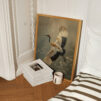
Japanese crane imagery aligns naturally with Japandi philosophy. Cranes symbolize balance, longevity, and calm — values central to Japandi design.
The long, elegant lines and open compositions allow crane artwork to integrate seamlessly into minimalist spaces while adding emotional depth.
Japanese crane wall art works especially well in Japandi interiors because it reinforces harmony rather than introducing visual noise.
Cloud Wall Art and the Role of Visual Breathing Space
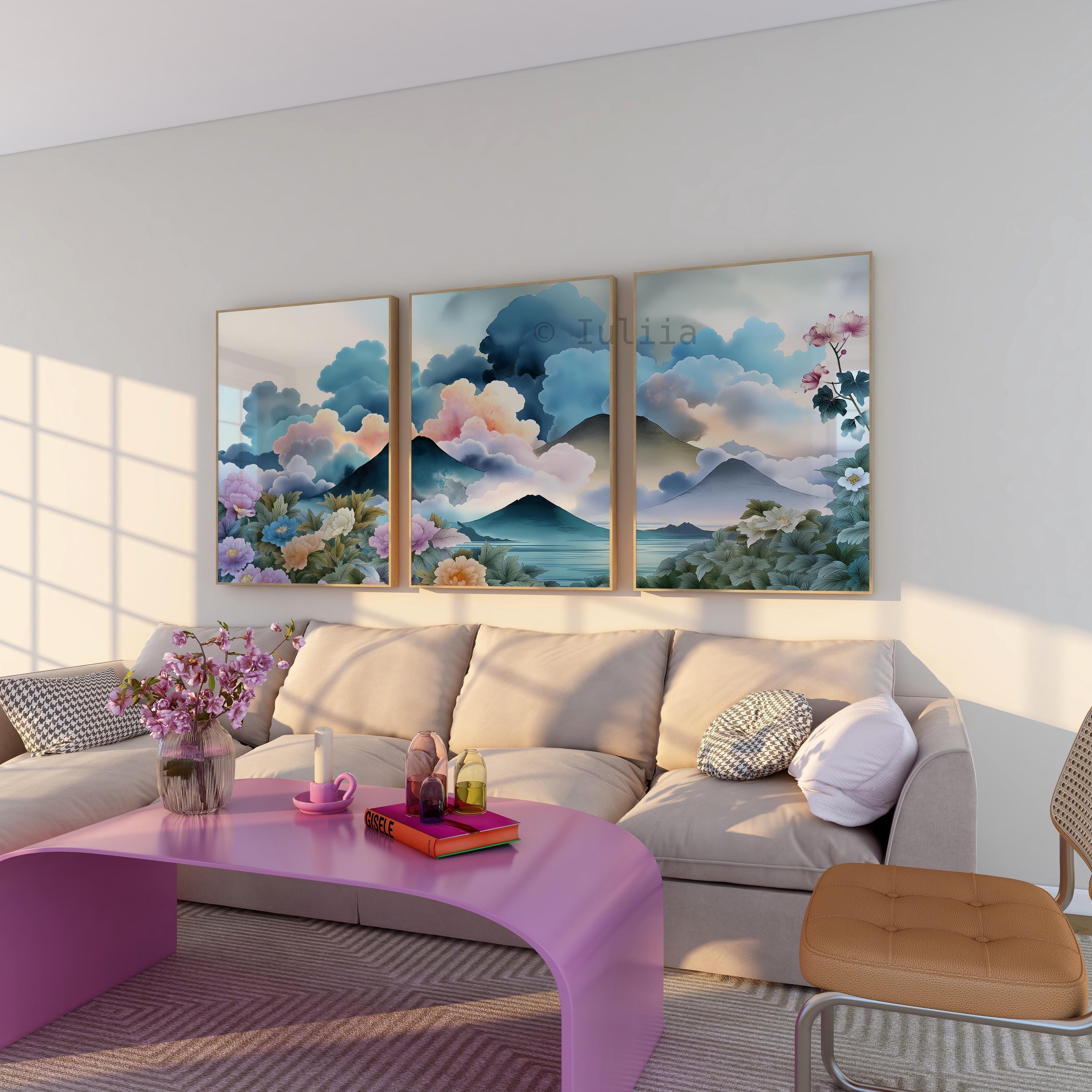
Negative space is fundamental to both Japanese and Scandinavian design. Cloud-inspired artwork uses soft gradients and open composition to create visual breathing space.
This helps walls feel calm and expansive rather than empty.
Cloud wall art enhances Japandi interiors by introducing softness and subtle movement while preserving minimal structure.
Natural Color Palettes Create Warmth
Japandi wall art typically uses muted, organic tones:
- Warm beige and sand tones
- Soft grey-blues
- Muted earth tones
- Warm off-whites
These colors integrate naturally with wood furniture and neutral textiles.
Wall Art as a Structural Element
In Japandi interiors, wall art is not decoration. It functions as a structural component of the space.
Carefully chosen artwork defines proportion, reinforces balance, and creates a focal point without disrupting calm.
Conclusion
Japandi succeeds where cold minimalism falls short. It preserves simplicity while restoring warmth and emotional presence.
Japanese crane wall art and cloud-inspired compositions embody this balance, transforming walls into calm, intentional focal points.