

For over a decade, minimalism defined modern interiors. White walls, restrained palettes, and visual reduction created calm environments. But as interiors became increasingly simplified, many began to feel emotionally neutral or even impersonal. In response, a new movement emerged — mindful maximalism.
Mindful maximalism reintroduces color, personality, and expressive visual elements without abandoning balance. It does not promote randomness or clutter. Instead, it focuses on intentional use of bold wall art, layered color, and structured composition to create interiors that feel alive and deeply personal.
What Makes Maximalism “Mindful”
Traditional maximalism was often associated with excess — many objects, intense color combinations, and layered decoration. Mindful maximalism evolves this idea by introducing discipline.
The goal is not to add more objects, but to add stronger visual anchors.
This is why wall art becomes the central element. Carefully selected artwork provides structure and emotional tone for the entire space.
Maximalist wall art defines the atmosphere, allowing other elements to remain supportive rather than competitive.
Why Bold Wall Art Is the Foundation of Maximalist Interiors
In mindful maximalism, walls are not empty backgrounds. They are active architectural surfaces.
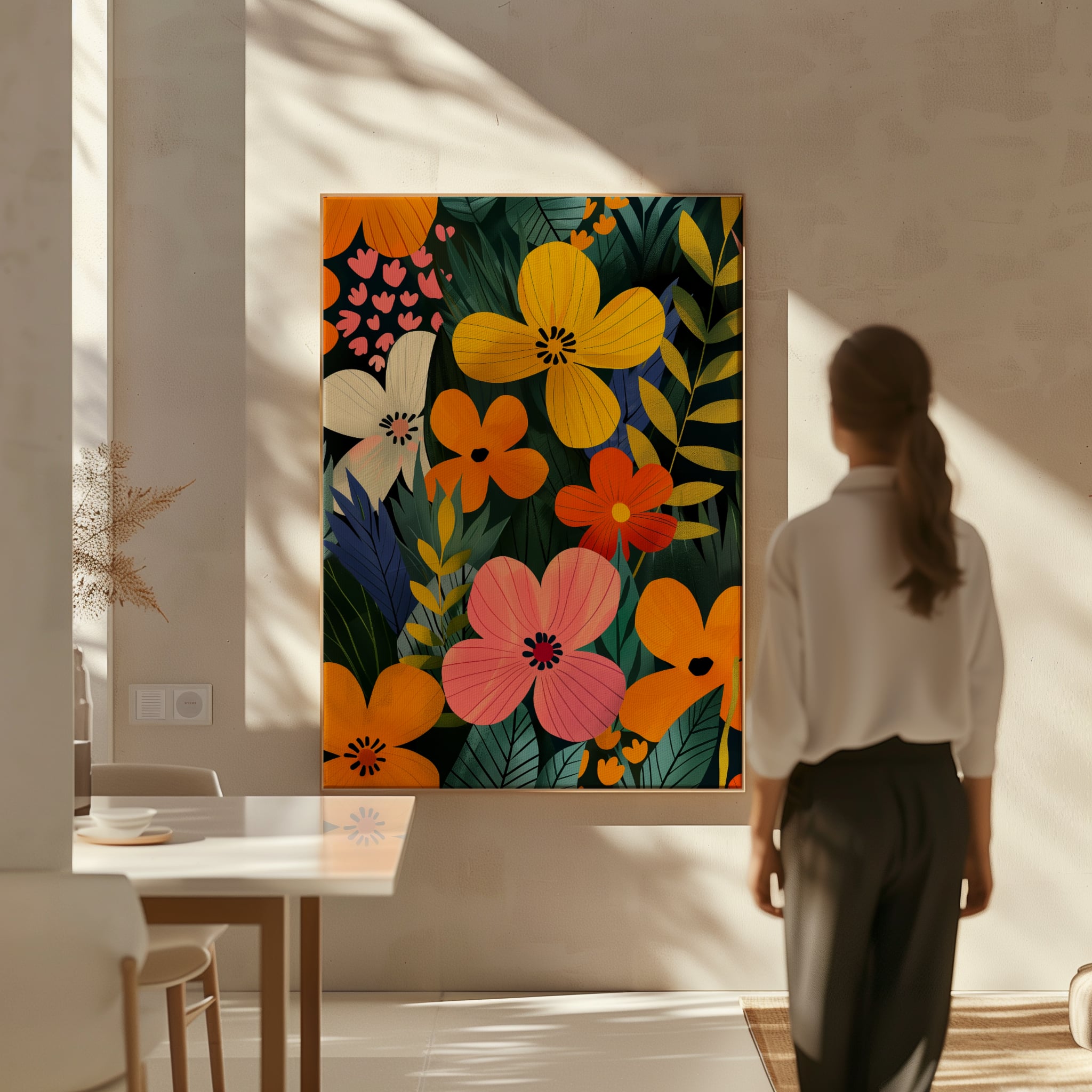
Large-scale, colorful artwork introduces visual energy, depth, and emotional warmth. Instead of relying on furniture or accessories, the wall itself becomes the defining feature of the room.
This approach simplifies design decisions. When strong artwork anchors the space, fewer additional decorative elements are required.
Color as Emotional Architecture
Color plays a structural role in maximalist interiors.
Rather than using neutral tones exclusively, mindful maximalism introduces bold colors in controlled compositions. These colors influence how the space feels.
- Warm tones create emotional warmth and comfort
- High contrast introduces energy and movement
- Layered color creates depth and visual richness
- Balanced palettes prevent visual fatigue
Abstract compositions are especially effective because they introduce color without rigid imagery.
Abstract modern wall art allows color and form to interact freely while maintaining compositional control.
Oversized Art Prevents Visual Chaos
One of the biggest misconceptions about maximalism is that it requires many objects. In reality, oversized artwork often creates stronger and cleaner maximalist interiors than multiple small pieces.
Large compositions unify the wall and establish visual hierarchy. The eye immediately understands where to focus.
This prevents the visual fragmentation that often leads to chaos.
Gallery Walls in Mindful Maximalism
Gallery walls can work within mindful maximalism when they are structured around strong anchor pieces.
Instead of treating every piece equally, one or two dominant artworks should define the composition. Smaller works then support the visual rhythm.
This hierarchy creates intentional layering rather than clutter.
The Psychological Impact of Expressive Wall Art
Bold wall art changes how a room feels.
Expressive compositions create emotional engagement. They make interiors feel personal rather than generic.
This psychological connection is a major reason mindful maximalism is gaining popularity.
Why Mindful Maximalism Feels Contemporary
Mindful maximalism aligns with contemporary values of individuality and emotional authenticity.
Rather than following strict design rules, it allows interiors to reflect personal taste while maintaining visual clarity.
Conclusion
Mindful maximalism demonstrates that bold wall art and expressive color can coexist with balance and structure.
Through intentional composition and strong visual anchors, maximalist wall art transforms interiors into spaces that feel alive, cohesive, and deeply personal.