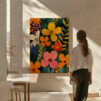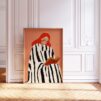


Gallery walls are evolving beyond traditional symmetrical arrangements. In modern interiors, maximalist gallery walls embrace bold expression, layered color, and visual storytelling.
Unlike minimalist walls that emphasize emptiness, maximalist walls embrace presence. They create dynamic visual environments that reflect personality and artistic identity.
The Difference Between Chaos and Composition
Maximalism does not mean randomness. Successful maximalist gallery walls follow clear compositional principles.
The most important principle is hierarchy. One or more dominant artworks establish the structure of the wall.
Maximalist wall art provides the visual strength needed to anchor the composition.
Anchor Pieces Create Structure
Anchor artworks act as visual foundations. They determine the scale, rhythm, and emotional tone of the gallery wall.
Without anchor pieces, gallery walls often feel scattered.
Oversized or highly expressive artworks work especially well as anchors.
Abstract Art Connects the Composition
Abstract artwork helps unify maximalist gallery walls.
Abstract modern wall art introduces fluid movement and color relationships that connect individual pieces.
This creates continuity rather than fragmentation.
Color Layering and Visual Depth
Color layering is essential to maximalist design.
Rather than using uniform tones, maximalist gallery walls combine complementary and contrasting colors to create depth.
This depth makes the wall feel dynamic and immersive.
Scale Variation Creates Energy
Varying artwork size introduces rhythm and movement.
Large artworks create stability, while smaller works add detail.
This balance creates visual energy without overwhelming the viewer.
Maximalism Reflects Personal Identity
Maximalist gallery walls are deeply personal.
They allow homeowners to express individuality and creative perspective.
This emotional authenticity is a key reason maximalism is growing in popularity.
Long-Term Flexibility
Maximalist gallery walls can evolve over time.
New artworks can be added while preserving overall structure.
This flexibility makes maximalism adaptable and sustainable.
Conclusion
Maximalist wall art transforms gallery walls into expressive visual environments.
Through bold color, abstract composition, and intentional hierarchy, maximalist interiors achieve energy without chaos.