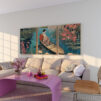


Styling Japanese wall art in a living room is not about filling empty walls. It is about creating balance, visual calm, and a sense of intention.
Unlike decorative or trend-driven art, Japanese wall art interacts closely with space, light, and furniture. When styled correctly, it becomes part of the architecture rather than an isolated object.
Why Living Rooms Are Ideal for Japanese Wall Art
The living room is where proportion matters most. Sofas, low seating, and open layouts create strong horizontal lines.
Japanese wall art often follows the same visual logic, which allows it to integrate naturally into modern living spaces.
Understanding Balance Before Choosing Art
Before selecting artwork, it is essential to understand the balance of the room.
Japanese wall art works best when the wall is not overloaded with furniture or decor. The surrounding space should support the artwork, not compete with it.
Choosing the Right Motifs for Living Rooms
Not all Japanese-inspired motifs work equally well in living rooms.
The most effective themes include:
- Clouds and sky-inspired compositions
- Minimal landscapes and horizons
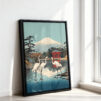
- Cranes or birds in calm motion
- Abstract nature-inspired forms
These subjects support relaxation and conversation rather than demanding attention.
Placement: Above Sofa vs Feature Wall
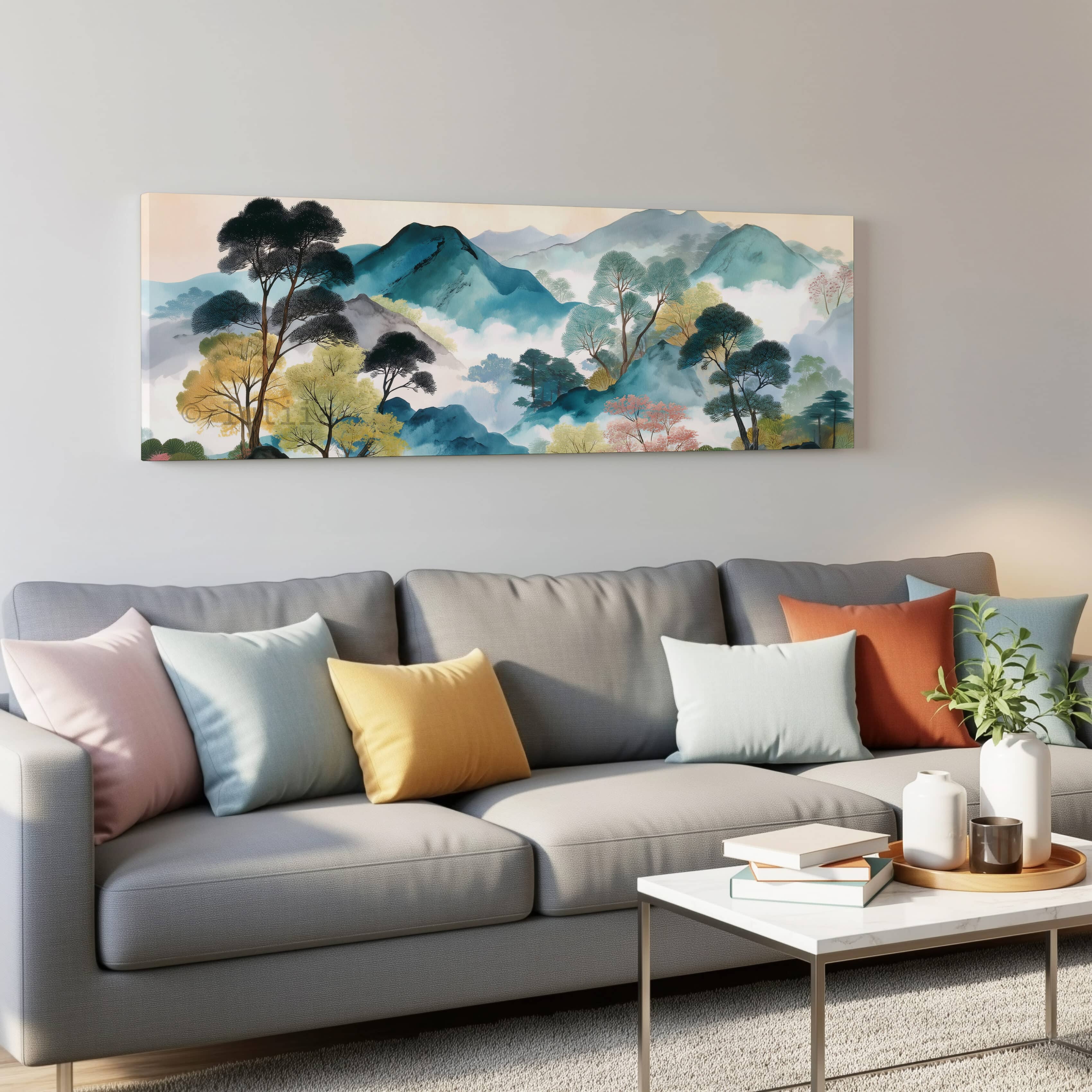
Above the sofa is the most common placement for Japanese wall art.
The artwork should visually align with the width of the sofa and sit low enough to feel connected to the furniture.
On feature walls, a single Japanese artwork often works better than multiple smaller pieces, maintaining clarity and calm.
Scale and Proportion
Japanese wall art benefits from correct scaling.
Artwork that is too small can feel timid, while oversized pieces without breathing space can feel heavy.
A balanced scale reinforces the quiet confidence of Japanese aesthetics.
Color Harmony in Modern Living Rooms
Japanese wall art often relies on muted, natural palettes.
In modern living rooms, this allows the artwork to blend seamlessly with wood tones, neutral upholstery, and soft lighting.
Conclusion
Styling Japanese wall art in a living room is an exercise in restraint.
When placed thoughtfully, it creates a space that feels calm, balanced, and timeless rather than decorative.