


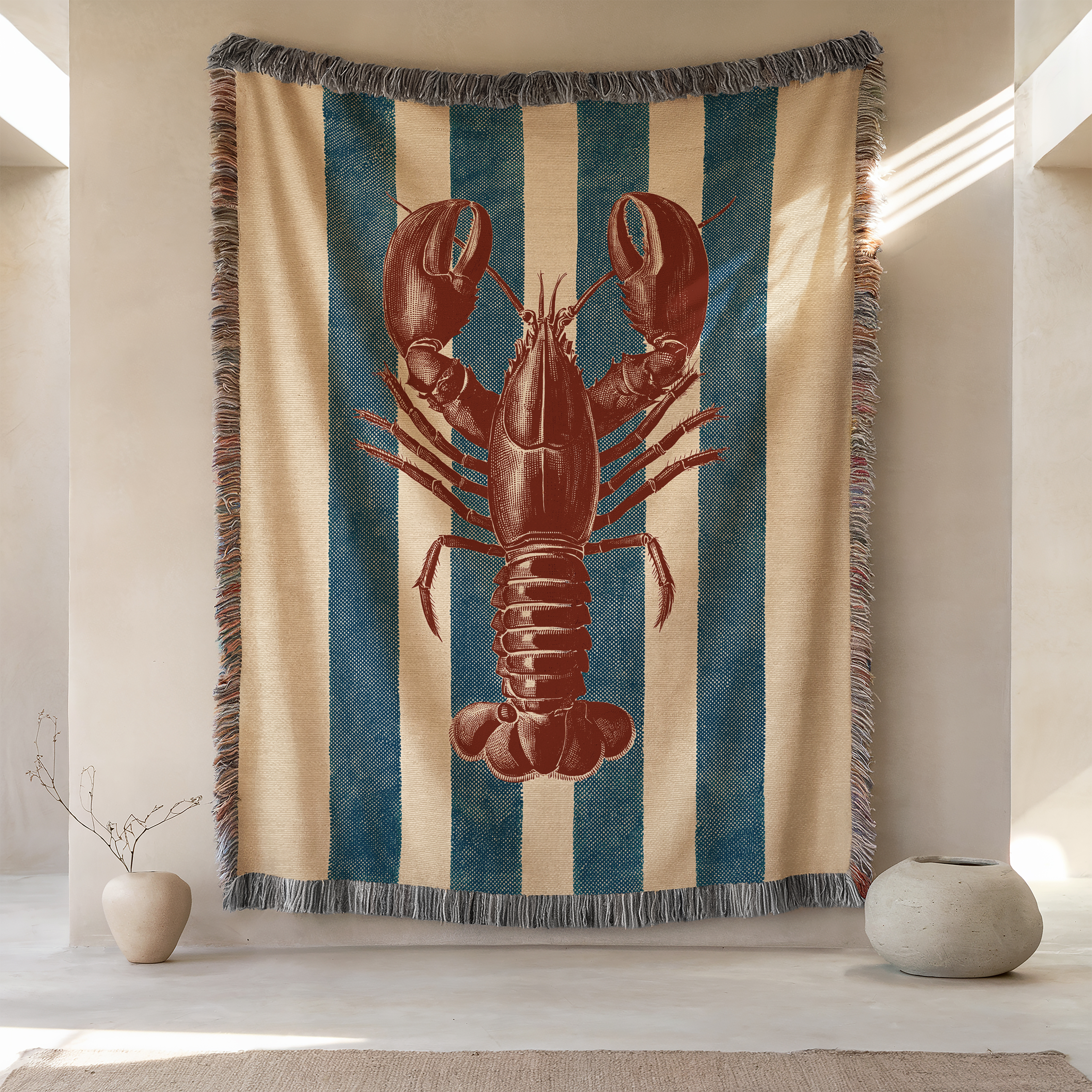
Woven Blankets as Wall Art: A Textured Alternative That Complements Prints in Modern 2026 Interiors
Wall decor is evolving. For years, framed prints and canvas art dominated interiors, offering clean lines and structured compositions. Today, a new element is entering the space — woven textiles used as wall art.
Woven blankets are not replacing traditional wall art. Instead, they are expanding how interiors are styled by introducing texture, softness, and depth that flat artwork cannot provide.
This shift reflects a broader movement in design: interiors are becoming more layered, more tactile, and more personal.
From Flat Surfaces to Textured Walls
Traditional wall art is primarily visual. Prints and canvases rely on color, composition, and framing to create impact.
Woven blankets add a different dimension — texture.
The interlaced threads create depth that changes with light and distance, making the artwork feel more physical and present in the room.
This tactile quality is one of the key reasons textile-based decor is gaining popularity in 2026.
How Woven Blankets Differ From Prints
Rather than competing with prints, woven blankets serve a different role in interior design.
Framed artwork provides clarity, structure, and precision. It works well when you want a clean, defined focal point.
Woven textiles, on the other hand, introduce softness and movement. They make a space feel warmer and more relaxed.
Because of this, many modern interiors combine both elements instead of choosing one over the other.
Why Layered Interiors Are Trending
One of the strongest interior trends in 2026 is layering.
Instead of relying on a single material or style, designers mix different textures to create depth and interest.
Hard surfaces such as frames, glass, and walls are balanced with soft materials like fabric, wool, and textiles.
Woven blankets fit perfectly into this approach.
They break the flatness of walls and add a sense of comfort that purely visual art cannot achieve.
Woven Blankets as Statement Pieces
Large woven blankets can function as statement wall art.
When used on their own, they create a soft focal point that feels less formal than framed artwork.
This works particularly well in relaxed interiors, bedrooms, and spaces designed for comfort.
At the same time, they can be combined with other wall art to create a more layered and curated look.
Can You Mix Woven Blankets and Wall Art?
Yes — and this is one of the most effective ways to style a modern interior.
Combining framed prints with textile elements creates contrast between structure and softness.
For example:
A framed print can define the focal point, while a woven blanket adds warmth and texture nearby
A textile piece can soften a space that feels too minimal or rigid
This combination creates a more dynamic and visually rich environment.
More Than Wall Art: A Functional Advantage
Unlike traditional wall decor, woven blankets are not limited to one purpose.
They can be used as wall art, styled on a sofa, or layered on a bed.
This flexibility makes them more versatile than most decorative elements.
Instead of being fixed in one place, they can move with the space and adapt to different uses.
How to Use Woven Blankets in Your Interior
There are several ways to incorporate woven blankets into your space:
As a wall hanging for a soft and textured focal point
Draped over a sofa to add warmth and color
Layered on a bed to create depth and comfort
Because they are both decorative and functional, they work in multiple areas of the home.
Conclusion
Woven blankets are not replacing traditional wall art — they are enhancing it.
By introducing texture, warmth, and flexibility, they bring a new dimension to interior design.
When combined with prints and framed artwork, they create layered spaces that feel more complete, more personal, and more visually engaging.
In 2026, the most interesting interiors are not built around a single type of decor, but around the balance between them.