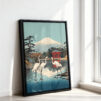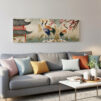


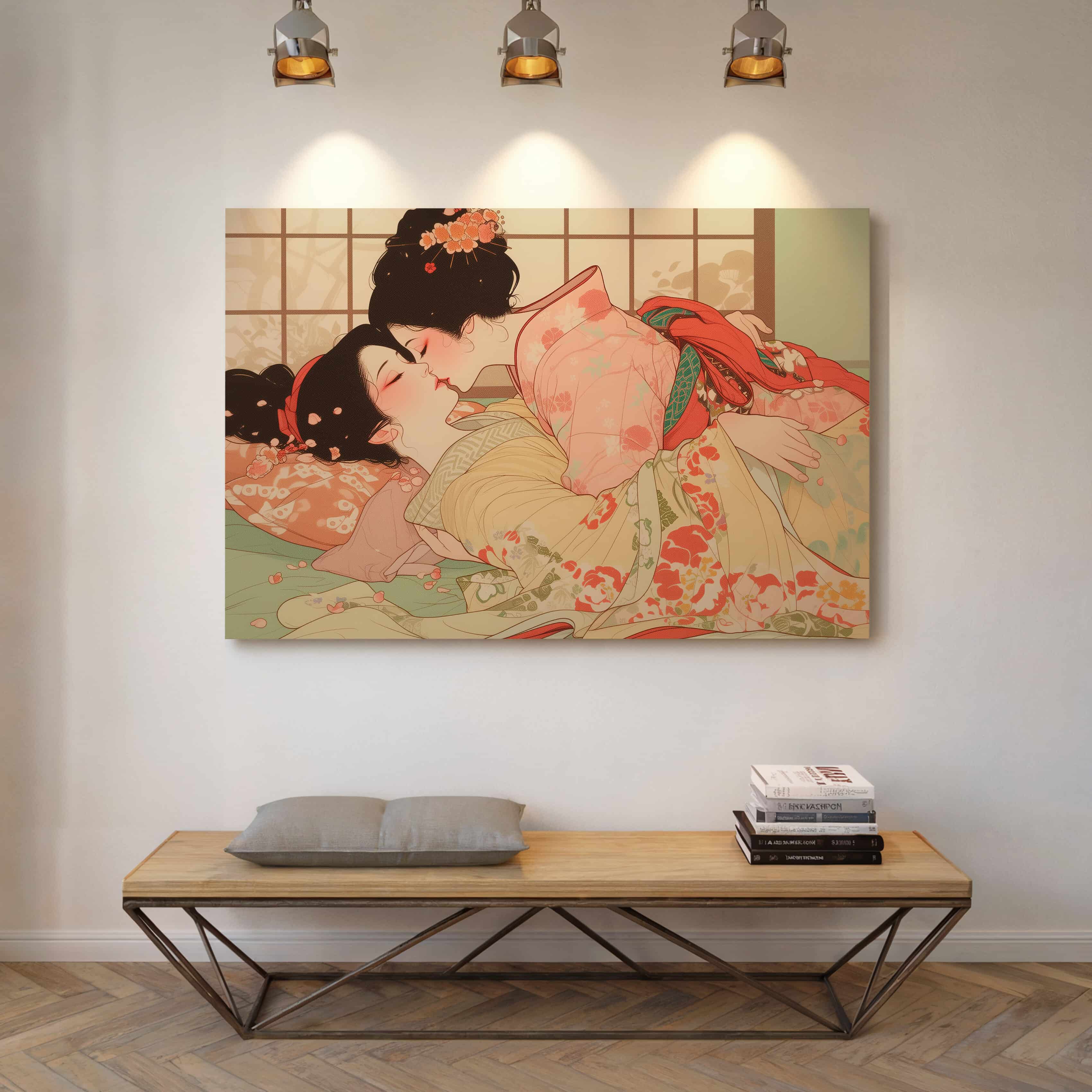
Ukiyo-e inspired wall art offers a rare combination in modern interior design: cultural depth and visual calm. While the style comes from Japan’s historic woodblock print tradition, it feels surprisingly current in contemporary homes because it aligns with what modern interiors value most – balance, atmosphere, and intentional space.
Today, ukiyo-e inspired Japanese wall art appears across minimalist living rooms, Japandi bedrooms, and modern apartments not because it is “vintage,” but because it is architecturally compatible with clean spaces. The compositions are strong, the movement feels controlled, and the use of negative space keeps the room breathable.
The Concept of the Floating World
The term “ukiyo-e” is commonly translated as “pictures of the floating world.” It reflects an awareness of impermanence and a focus on the beauty of fleeting moments – changing seasons, shifting weather, waves in motion, a bird in flight, or a quiet landscape that feels larger than the scene itself.
This philosophy resonates strongly with contemporary home design. Modern interiors increasingly prioritize emotional experience over decoration. People want rooms that feel calm, grounded, and intentional – not overly styled or visually noisy. Ukiyo-e inspired wall art supports that goal by creating atmosphere rather than insisting on attention.
What Defines Ukiyo-e Style
Ukiyo-e is not only “Japanese art.” It has a recognizable design language that makes it effective as wall decor:
- Strong composition: clear structure, often with asymmetry that still feels balanced
- Rhythm and movement: waves, wind, clouds, and flowing lines guide the eye naturally
- Intentional negative space: open areas function as part of the design, not “empty background”
- Graphic clarity: simplified forms that read well from a distance
These qualities are exactly what modern interiors need: art that feels designed, not decorative.
Why Ukiyo-e Feels Modern Despite Its History
Many historic art styles feel heavy in contemporary rooms because they rely on dense detail or dramatic realism. Ukiyo-e is different. It avoids excessive realism and focuses on visual structure.
Instead of trying to mimic a photograph, ukiyo-e expresses the essence of a moment through composition. This makes it compatible with modern spaces where clean lines, natural materials, and restrained color palettes dominate.
In other words, ukiyo-e inspired wall art feels modern because it behaves like modern design: it is built around proportion, rhythm, and space.
Movement and Flow in Ukiyo-e Inspired Art
One of the most powerful features of ukiyo-e inspired wall art is movement. Unlike static artwork, many ukiyo-e compositions actively guide the eye across the scene.
That’s why this style works exceptionally well on wide walls and in horizontal formats. Wave forms, cloud bands, distant horizons, and sweeping diagonals create a natural flow across the wall. In contemporary interiors – especially open-plan spaces – that flow helps the room feel cohesive rather than fragmented.
If you decorate a long wall above a sofa or along an open corridor, ukiyo-e inspired wall art often performs better than traditional vertical prints because the composition matches the architecture.
Color Restraint and Timeless Appeal
Traditional woodblock prints can be bold, but modern ukiyo-e inspired wall art often uses softened, natural palettes that fit contemporary interiors.
Common modern-friendly color directions include:
- Muted indigo and soft blues (perfect for calm living rooms)
- Warm neutrals with subtle contrast (ideal for Japandi interiors)
- Minimal black and cream variations (graphic, but not loud)
- Soft sunrise tones (warmth without brightness overload)
This restraint helps ukiyo-e inspired wall art stay timeless. It doesn’t fight furniture changes, and it rarely looks dated when a room evolves.
Ukiyo-e and Minimalist Interiors
Minimalist spaces require art that adds depth without clutter. Ukiyo-e inspired wall art achieves this by communicating atmosphere through space rather than through detail.
Because the compositions are strong, a single piece can create a focal point without needing additional decor around it. That is a key reason ukiyo-e style works so well in minimalist and modern interior design.
How to Style Ukiyo-e Inspired Wall Art
To make ukiyo-e style art look intentional (not “theme decor”), focus on integration:
- Match the room’s rhythm: choose horizontal art for wide furniture layouts
- Use breathing space: avoid surrounding it with many small objects
- Repeat materials: natural wood, linen, stone tones pair especially well
- Keep decor simple: one strong piece often works better than a gallery wall
Ukiyo-e inspired wall art looks strongest when it is treated as a design element, not an accessory.
Where Ukiyo-e Inspired Wall Art Works Best
- Living rooms with long or wide walls: supports horizontal flow and structure
- Modern apartments: creates depth without visual clutter
- Japandi and Wabi-sabi interiors: fits the philosophy of balance and calm
- Bedrooms: works as a quiet focal point that supports rest
- Home offices: adds atmosphere without distraction
Choosing the Right Ukiyo-e Inspired Piece
If you want the artwork to feel timeless rather than trend-based, choose based on composition first, subject second.
Look for:
- clear, structured composition that reads well from a distance
- controlled movement (flow without chaos)
- enough negative space to keep the room calm
- a palette that supports your interior rather than becoming the “main color” of the room
Common Mistakes to Avoid
- Hanging too high: ukiyo-e style relies on harmony; wrong height breaks the calm
- Choosing art that is too small: strong composition needs appropriate scale
- Over-styling the wall: this style needs breathing space
- Mixing with too many competing patterns: keep surrounding decor calmer
Conclusion
Ukiyo-e inspired wall art enriches contemporary home design by combining cultural depth with visual calm. It offers composition that feels architectural, movement that feels controlled, and negative space that supports modern living.
Because it is rooted in timeless principles rather than short-lived trends, ukiyo-e inspired Japanese wall art remains one of the most reliable choices for interiors that aim to feel balanced, intentional, and enduring.