

Should Kitchen Art Be Abstract or Realistic? How to Choose the Right Style for Modern Kitchen and Dining Decor
Choosing kitchen wall art is not only about finding something pretty. The artwork needs to fit the room’s function, color palette, mood, and overall interior style. One of the most common questions is whether kitchen art should be abstract or realistic.
The answer is simple: both can work. The better choice depends on what kind of kitchen you have and what feeling you want to create.
Realistic kitchen art can feel familiar, warm, traditional, or nostalgic. Abstract kitchen art can feel modern, expressive, colorful, and more design-led. The strongest choice is the one that supports the space without making it feel generic, cluttered, or disconnected.
Should kitchen art be abstract or realistic?
Kitchen art can be abstract or realistic. Realistic art works best when you want clear subjects, familiar imagery, and a more traditional or Mediterranean atmosphere. Abstract art works best when you want a modern, graphic, or expressive look.
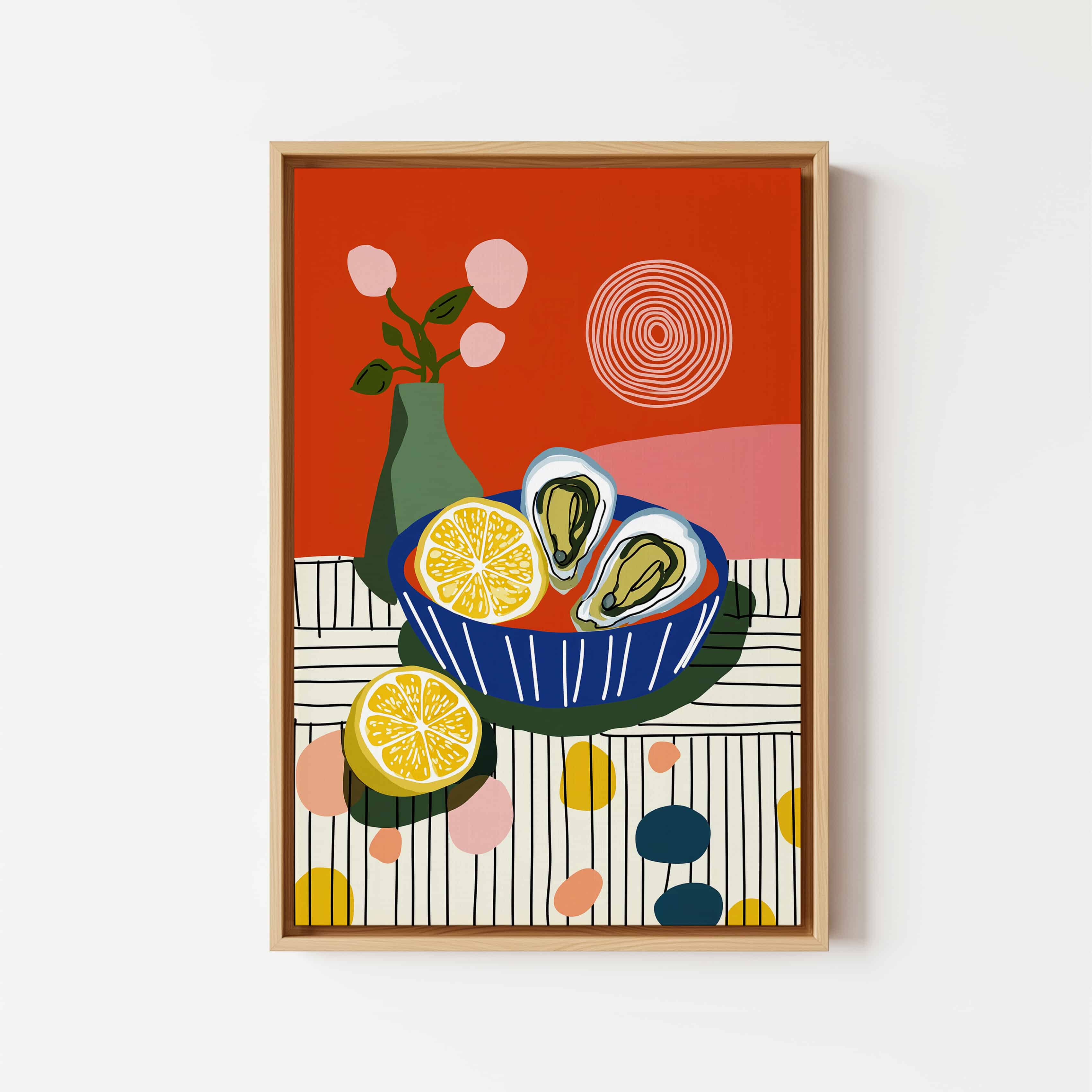
For many contemporary kitchens, the strongest option is somewhere in between: modern still life art, stylized food prints, graphic fruit artwork, colorful floral vase compositions, or semi-abstract seafood wall art.
This approach keeps the subject recognizable while making the artwork feel fresh and interior-friendly.
What type of art looks good in a kitchen?
Art that looks good in a kitchen usually connects to food, gathering, plants, color, or everyday home life.
Strong kitchen wall art subjects include fruit, citrus, tomatoes, sardines, lobster, wine, flowers, vases, bowls, bottles, plants, ceramics, table scenes, and café-inspired compositions.
These subjects work because they feel natural in a kitchen or dining environment without relying on obvious text signs.
Kitchen and dining wall art is especially useful when you want artwork that feels designed for cooking, eating, gathering, and warm home interiors.
What is realistic kitchen art?
Realistic kitchen art shows recognizable subjects clearly. This can include paintings or prints of fruit, vegetables, seafood, flowers, table settings, bottles, plates, or café scenes.
Realistic artwork can work beautifully in rustic kitchens, farmhouse interiors, Mediterranean spaces, traditional dining rooms, vintage-inspired cafés, and homes that feel warm and collected.
The risk is that realistic kitchen art can look dated if the composition, colors, or styling feel too old-fashioned. To avoid that, choose realistic or semi-realistic pieces with strong color, good composition, and a fresh point of view.
What is abstract kitchen art?
Abstract kitchen art uses shape, color, line, texture, and composition rather than literal detail.
It may suggest food, flowers, plants, or table scenes without showing them realistically. For example, a colorful abstract still life can include fruit-like shapes, vase forms, patterned surfaces, or botanical silhouettes while still feeling modern.
Abstract modern wall art works well in kitchens when it feels warm, graphic, organic, or connected to the room’s palette.
Is abstract wall art still in style?
Yes, abstract wall art is still in style, especially when it has depth, warmth, and strong composition.
Flat, generic abstract prints can feel weak, but modern abstract art with bold shapes, layered colors, organic forms, or still-life influence remains highly relevant.
In kitchens, abstract art works best when it does not feel cold or corporate. It should add personality, color, or rhythm to the space.
What is the difference between realistic art and abstract art?
The difference is how directly the artwork represents its subject.
Realistic art shows objects in a recognizable way. You can clearly identify fruit, flowers, fish, plates, or a table scene.
Abstract art uses visual elements more freely. It may focus on color, shape, balance, and movement instead of literal detail.
For kitchen decor, realistic art can feel more familiar, while abstract art can feel more contemporary.
Which is better for a modern kitchen?
For a modern kitchen, abstract or stylized art usually works better than very traditional realistic art.
Modern kitchens often have clean cabinets, simple surfaces, stone countertops, metal finishes, and open layouts. Abstract or graphic artwork can soften those hard surfaces while keeping the room contemporary.
However, realistic art can still work if it is styled in a modern way. A bold sardine print, colorful fruit still life, or clean floral vase composition can feel modern even if the subject is recognizable.
Which is better for a traditional kitchen?
Traditional kitchens often work well with realistic or semi-realistic artwork.
Fruit prints, floral still life, vintage food posters, botanical art, and Mediterranean table scenes can create warmth and familiarity.
The key is avoiding artwork that feels too generic. A traditional kitchen does not need basic kitchen signs. It benefits more from art with depth, color, and character.
Which is better for a colorful kitchen?
A colorful kitchen can handle either abstract or realistic art, but the palette needs control.
If the kitchen already has bright cabinets, patterned tiles, or colorful accessories, choose artwork that repeats one or two existing colors rather than adding many new ones.
If the kitchen is neutral and you want more energy, bold abstract still life, fruit prints, colorful seafood art, or dopamine-style kitchen wall art can create the main accent.
Which is better for a neutral kitchen?
Neutral kitchens often benefit from artwork with color, texture, or subject matter that prevents the room from feeling flat.
Abstract art can add movement and modernity. Realistic or stylized still life art can add warmth and familiarity.
For a beige, cream, white, grey, or wood-toned kitchen, artwork with terracotta, citrus yellow, olive green, muted blue, red, coral, or soft pink can make the room feel more finished.
Is still life art good for kitchens?
Yes, still life art is one of the strongest choices for kitchens because it naturally connects with food, flowers, vessels, plants, and table scenes.
Still life does not have to mean old-fashioned fruit bowls. Modern still life wall art can feel graphic, colorful, playful, Mediterranean, minimalist, maximalist, or contemporary.
Still life wall art is especially flexible because it can include food, fruit, seafood, floral vases, ceramics, botanical forms, and decorative objects.
Does kitchen wall art have to show food?
No, kitchen wall art does not have to show food.
Flowers in a vase, botanical still life, ceramics, abstract shapes, colorful patterns, and café-inspired artwork can also work well.
The important question is whether the artwork feels natural in the kitchen or dining environment. If the piece supports the mood of cooking, gathering, warmth, or daily rituals, it can work even without literal food imagery.
Is food art too obvious for a kitchen?
Food art can look obvious if it is too literal, cheap-looking, or based on generic text.
But food art can also look sophisticated when it is treated as real artwork. Citrus prints, sardine art, tomato compositions, lobster wall art, wine scenes, and colorful table settings can feel stylish when the composition and palette are strong.
The difference is execution. A basic “kitchen rules” sign can look generic. A bold modern still life print can look curated.
How do I choose between abstract and realistic kitchen art?
Choose based on the style of the room and the effect you want.
Choose abstract kitchen art if you want:
- A modern look
- More color and movement
- Less literal decoration
- A stronger design statement
- Artwork that feels contemporary
Choose realistic kitchen art if you want:
- A warmer traditional feel
- Recognizable food or floral subjects
- A Mediterranean, vintage, rustic, or café mood
- Artwork that feels familiar and easy to understand
Can abstract art make a kitchen look expensive?
Yes, abstract art can make a kitchen look more expensive when it has good scale, strong composition, and colors that connect with the room.
A large abstract piece can make a plain kitchen wall feel intentional. A colorful abstract print can bring energy to a neutral kitchen. A soft abstract composition can add calm without clutter.
The artwork should not look random. It should feel connected to the kitchen’s materials, colors, and mood.
Can realistic art make a kitchen look expensive?
Yes, realistic art can look expensive if it avoids cliché.
A well-composed still life, botanical artwork, seafood print, or vintage-inspired food piece can make a kitchen feel collected and personal.
The problem is not realism itself. The problem is low-quality imagery, poor color, bad scale, or artwork that looks like generic stock decor.
What makes kitchen art look cheap?
Kitchen art can look cheap when it is too small, poorly placed, overly generic, or disconnected from the room.
Common problems include:
- Tiny prints on large empty walls
- Too many unrelated signs
- Random colors that clash with the kitchen
- Low-quality food imagery
- Artwork placed too close to steam, grease, or water
Better kitchen art should feel intentional, properly scaled, and visually connected to the room.
What colors work best for kitchen art?
The best colors depend on the kitchen palette, but warm and appetizing tones often work well.
Strong options include terracotta, citrus yellow, tomato red, olive green, navy, cream, soft blue, coral, warm pink, black accents, and muted earthy tones.
If the kitchen is neutral, artwork can introduce color. If the kitchen already has color, artwork should repeat or support the existing palette.
What colors should not be used in kitchen art?
No color is completely forbidden, but some colors can feel difficult in kitchens if used poorly.
Very cold gray, muddy brown, harsh black, or overly sterile blue can make the room feel less warm if there is no balance.
If you use darker or cooler tones, balance them with cream, wood, warm metals, greenery, or warmer accent colors.
Where should abstract kitchen art be placed?
Abstract kitchen art works best on walls where it has enough visual space.
Good placements include breakfast nooks, dining corners, open side walls, walls near shelves, and spaces above sideboards or benches.
Avoid placing artwork directly above the stove or too close to the sink, where steam, grease, or splashes can damage it.
Where should realistic kitchen art be placed?
Realistic kitchen art works well in cozy, visible areas where the subject can be appreciated.
Fruit prints, floral still life, and seafood artwork look especially good in breakfast nooks, dining areas, small wall gaps, or near open shelving.
If the artwork has a lot of detail, place it where people can view it comfortably rather than too high or too far away.
Can I mix abstract and realistic kitchen art?
Yes, you can mix abstract and realistic kitchen art if there is a clear connection between the pieces.
The connection can be color, subject, mood, or style. For example, a realistic sardine print can work near an abstract blue and yellow composition if the palette feels related.
For a cleaner look, avoid mixing too many unrelated styles in one small area.
Is set of 3 wall art good for kitchens?
Yes, set of 3 wall art can work very well in kitchens and dining rooms, especially on wider walls.
A three-piece still life set can create rhythm above a dining bench, sideboard, breakfast nook, or long empty wall.
Set of 3 formats are useful because they give the visual impact of large artwork while still feeling flexible and decorative.
What is the 2/3 rule for kitchen wall art?
The 2/3 rule means the artwork should usually cover about two-thirds of the width of the furniture or surface beneath it.
In kitchens and dining spaces, this applies above benches, sideboards, dining tables, consoles, or breakfast nooks.
If the artwork is too small, it can look weak. If it is too large, it may overpower the space.
What is the 3-5-7 rule in decorating?
The 3-5-7 rule suggests that odd-numbered groupings often look natural in decor.
For kitchen wall art, this means a set of 3 prints can be visually pleasing and easy to arrange.
Three-piece artwork works especially well when the wall is too wide for one small print but not suitable for a crowded gallery wall.
What is the best kitchen art for modern homes?
The best kitchen art for modern homes is artwork that feels intentional, not generic.
Strong choices include abstract modern prints, colorful still life wall art, graphic fruit artwork, floral vase compositions, seafood prints, and contemporary dining room art.
The artwork should support the kitchen’s colors, improve the mood of the room, and create a focal point without adding clutter.
Conclusion
Kitchen art can be abstract or realistic. Both styles can work when they are chosen with the room in mind.
Realistic kitchen art feels familiar, warm, and often traditional. Abstract kitchen art feels modern, expressive, and design-led. Modern still life art often gives you the best of both: recognizable subjects with fresh composition and contemporary color.
The strongest kitchen wall art is not defined only by whether it is abstract or realistic. It is defined by scale, color, placement, and how naturally it belongs in the space.