

Modern triptych wall art is one of the most practical ways to decorate a wide wall while creating the visual impact of large artwork. Instead of using one oversized piece or building a complicated gallery wall, a triptych divides a composition across three coordinated panels, creating rhythm, balance and movement.
In 2026, interiors are becoming warmer, more personal and more expressive. Homeowners are moving beyond purely decorative filler and choosing artwork that gives a room a clear focal point. Triptych wall art fits naturally into this direction because three coordinated panels can fill a large wall without making the space feel cluttered.
Modern triptychs can be abstract, botanical, feminine, Japanese-inspired, maximalist, neutral, coastal or panoramic. They work especially well above sofas, beds, dining furniture and long empty walls where one small artwork would feel visually lost.
Explore the full Triptych Wall Art collection to find coordinated sets of three prints and canvases designed for modern interiors.
What Is Triptych Wall Art?
Triptych wall art is artwork presented in three coordinated panels. The word “triptych” traditionally describes an artwork divided into three sections, but in modern interior design it can refer to several different layouts.
Some triptychs use one continuous image divided across three panels. Others use three individual artworks designed to work together as one visual composition. A modern triptych may also use related colors, subjects or shapes without forming one continuous image.
The three-panel format is especially useful because it creates more movement than a single rectangular artwork. The spaces between the panels become part of the composition, allowing the artwork to spread naturally across a wider wall.
Triptych wall art can include three framed prints, three canvas panels, three coordinating posters or a panoramic composition divided into three sections.
Is Triptych Wall Art Still in Style in 2026?
Yes. Triptych wall art remains relevant in 2026 because the format solves a practical decorating problem: how to create visual impact on a large or wide wall without filling it with many unrelated pieces.
The way triptychs are styled has changed, however. Older three-panel decor often relied on generic landscapes or heavily matched decorative sets. Modern triptych wall art feels more intentional and artistic.
Current interiors favor stronger focal points, personal artwork, richer color palettes and more expressive compositions. This makes modern triptychs particularly useful in living rooms, bedrooms and dining spaces where the artwork needs enough scale to balance large furniture.
A triptych also offers an alternative to a traditional gallery wall. Instead of coordinating many different frames and artworks, three related pieces create structure while still giving the wall movement and visual interest.
Modern Triptych Wall Art Trends for 2026
Triptych trends in 2026 reflect broader changes in interior design. Rather than one dominant aesthetic, the strongest direction is toward more personal artwork and more intentional focal points.
Large Statement Triptychs
Large wall art continues to work well in modern interiors because scale helps anchor furniture and define a room. A large three-panel composition can create the feeling of oversized artwork while remaining easier to arrange than one extremely large piece.
This works particularly well above sectional sofas, long dining tables, king-size beds and wide consoles.
Warm and Earthy Color Palettes
Warm beige, cream, terracotta, clay, muted green, brown, burgundy and soft red are strong choices for 2026 interiors. Triptych art using warmer palettes can soften modern furniture and make neutral rooms feel more welcoming.
Warm neutrals are especially useful when you want statement art without making the room overly colorful.
Bold Color and Dopamine-Inspired Triptychs
At the opposite end of the spectrum, colorful triptych wall art works well in expressive interiors. Red, orange, pink, blue, green and yellow can transform a neutral wall into a focal point.
Instead of scattering many colorful accessories around a room, one coordinated triptych can provide concentrated color while keeping the overall interior visually controlled.
Botanical and Nature-Inspired Sets
Botanical forms, flowers, birds, clouds, landscapes and organic shapes continue to work well in modern homes because they bring softness into spaces dominated by straight furniture lines and architectural surfaces.
A botanical triptych can be calm and neutral or dramatic and colorful depending on the interior.
Japanese-Inspired Triptych Wall Art
Japanese-inspired artwork is particularly suited to the triptych format because landscapes, cranes, botanical elements and flowing compositions can naturally continue across several panels.
Japanese crane triptychs can create a calm but visually strong focal point in bedrooms, living rooms and dining spaces.
Feminine and Portrait Triptychs
Feminine wall art can also work across three panels, especially when portraits, botanical details, fashion-inspired figures or abstract shapes share a coordinated palette.
This type of triptych works well in bedrooms, dressing areas, beauty rooms, creative studios and contemporary living rooms.
Abstract Modern Triptychs
Abstract triptychs remain one of the most flexible choices for modern interiors. Organic shapes, geometric compositions, textured-looking surfaces and flowing color can extend naturally across three coordinated panels.
Abstract triptych wall art can work in minimalist, Scandinavian, warm modern, contemporary and eclectic interiors.
How to Choose the Right Triptych for Your Room
Choosing the right triptych begins with the wall rather than the artwork alone. Consider the available width, furniture below the artwork, ceiling height and how much visual weight the room already has.
If the room is neutral and simple, the triptych can become the main source of color and personality. If the room already contains patterned rugs, colorful furniture or decorative wallpaper, a calmer triptych may create better balance.
Also consider the mood you want to create.
Soft botanical, neutral abstract and Japanese-inspired artwork can create a calmer atmosphere. Bold florals, maximalist compositions and colorful abstract triptychs create more energy. Feminine portraits add personality, while panoramic landscapes can make a wall feel wider and more open.
The best triptych should feel connected to the room without matching every element exactly.
What Size Triptych Should You Choose?
Triptych size is one of the most important styling decisions. Artwork that is too small can look disconnected from the furniture below it, while artwork that is too wide can overwhelm the wall.
A useful starting point is to choose a total triptych width of approximately two-thirds to three-quarters of the furniture below it. Treat all three panels and the gaps between them as one complete artwork when calculating the total width.
For example, if your sofa is 90 inches wide, a triptych with a total displayed width of approximately 60 to 70 inches can create a balanced relationship.
For an especially minimal room, you may choose a slightly smaller composition. For a large statement wall, you may go wider while leaving enough negative space around the artwork.
Small Triptych Wall Art
Smaller triptychs work well above narrow consoles, desks, benches and smaller beds. They can also be used in hallways or compact apartments where a large composition would dominate the space.
Medium Triptych Wall Art
Medium-size sets are versatile for standard living rooms, bedrooms and dining areas. They provide enough presence to create a focal point while remaining easy to style.
Large Triptych Wall Art
Large triptychs are best for wide living room walls, large bedrooms, dining rooms and open-plan interiors. They can visually anchor substantial furniture and make tall or expansive walls feel more complete.
Triptych Wall Art Above a Sofa
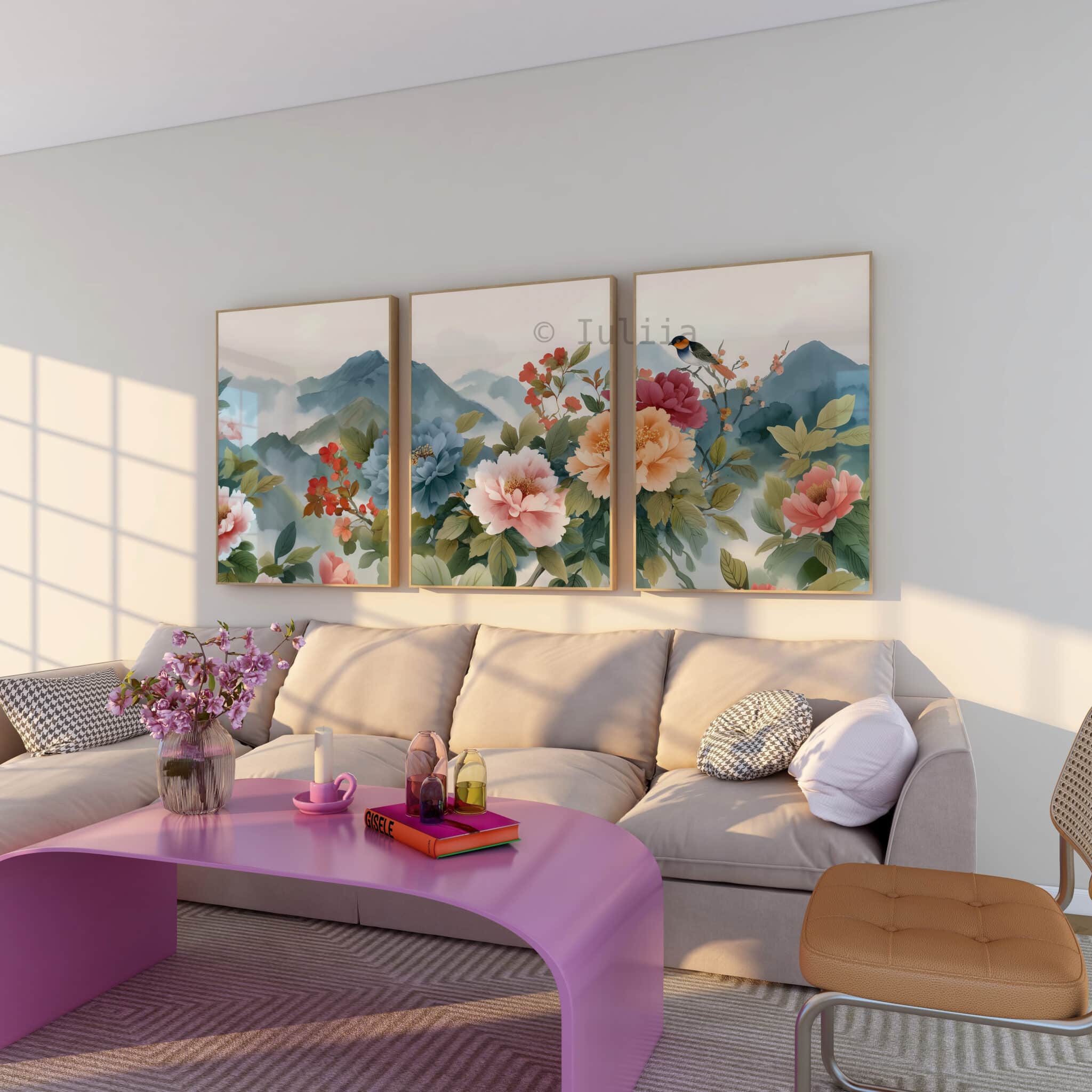
Above a sofa is one of the strongest placements for triptych wall art because the horizontal shape of a three-panel arrangement naturally follows the width of the furniture.
Start by treating the three panels as one artwork. Center the entire composition over the sofa rather than centering each panel against cushions or individual furniture sections.
As a general starting point, aim for the full triptych arrangement to occupy around two-thirds to three-quarters of the sofa width.
The bottom of the artwork should usually sit close enough to the sofa to feel connected to it rather than floating high on the wall. Around 6 to 10 inches above the sofa is a useful starting range, although ceiling height, panel size and furniture proportions can change the ideal placement.
If your sofa is very wide, a larger triptych usually looks stronger than three small prints separated by large empty spaces.
Should a Triptych Be Centered Above the Sofa?
In most rooms, yes. Centering the full composition above the sofa creates the cleanest visual balance.
However, asymmetrical placement can work in more eclectic interiors if another object, such as a lamp, plant or side table, balances the composition.
Triptych Wall Art for Bedrooms
Triptych wall art works particularly well above a bed because the three-panel structure naturally follows the horizontal width of the headboard.
For calm bedrooms, choose softer palettes, botanical artwork, clouds, Japanese-inspired scenes, feminine abstract compositions or warm neutral art.
For bedrooms that need more personality, choose deeper color, dramatic florals, expressive portraits or bold abstract triptychs.
As with sofa styling, consider the entire three-panel arrangement as one artwork. A useful starting point is for the total composition to cover roughly 60 to 80 percent of the width of the bed or headboard.
Do not hang the triptych too high. Keeping the panels visually connected to the bed helps the artwork feel like part of the bedroom design rather than an isolated decoration.
Triptych Wall Art Above a King Bed
A king bed usually needs substantial artwork. Three larger panels can fill the width more naturally than one small central print.
Choose a composition with enough scale to hold its own against the bed, headboard, bedside tables and lamps.
Triptych Wall Art Above a Queen Bed
A queen bed offers more flexibility. Medium-size panels often work well, especially when the gaps between them are kept relatively narrow.
If the artwork is visually detailed, slightly smaller panels can still make a strong impact.
Canvas vs Framed Triptych Wall Art
Both canvas and framed triptych wall art can work beautifully, but they create different visual effects.
Triptych Canvas Wall Art
Canvas creates a softer, more continuous look. Because there is no strong frame around each panel, the eye can move more easily from one section to another.
This makes canvas particularly effective for continuous landscapes, abstract compositions, botanical scenes and panoramic triptychs.
Canvas also has more visual depth than a flat paper print and can create a substantial focal point without feeling overly formal.
Framed Triptych Wall Art
Framed triptychs create more structure. The frame clearly separates each panel and can make the arrangement feel more architectural or polished.
Black frames can add contrast to modern interiors, white frames can create a lighter look, and natural wood frames work well with Scandinavian, Japandi, botanical and warm modern decor.
Framed triptychs are especially useful when the artwork consists of three coordinated but separate images rather than one continuous composition.
Which Is Better: Canvas or Framed Triptych?
Neither format is automatically better. Choose canvas when you want a softer, more seamless visual effect. Choose framed prints when you want cleaner edges, stronger structure or a more finished gallery-style presentation.
The room itself can help you decide. A highly structured interior may benefit from the softness of canvas, while a relaxed room may gain definition from framed artwork.
How Much Space Should Be Between Triptych Panels?
The spacing between triptych panels affects whether the three pieces look like one composition or three unrelated artworks.
A common starting point is approximately 2 to 4 inches between panels, or about 5 to 10 centimeters.
Smaller triptychs generally look better with narrower gaps. Larger panels can tolerate slightly more space.
If the artwork forms one continuous image, keep the spacing relatively tight so the eye can follow the composition easily from one panel to the next.
If the three panels are related but separate artworks, slightly wider spacing can work because each piece has more visual independence.
Can Triptych Panels Be Too Far Apart?
Yes. Large gaps can make a triptych lose its visual connection. If you immediately perceive three separate artworks instead of one coordinated composition, the spacing may be too wide.
The panels should have enough room to breathe while still reading as one group.
Should All Three Triptych Panels Be at the Same Height?
For most modern triptychs, aligning the panels at the same height creates the cleanest look.
However, staggered or stepped arrangements can work when the artwork was specifically designed for that layout. Avoid changing the height randomly if the image is supposed to continue across all three panels.
Best Triptych Styles for Modern Interiors
The best triptych style depends on the architecture, furniture and atmosphere of the room. Because the three-panel format is flexible, it can work across many interior styles.
Modern Abstract Triptych Wall Art
Abstract triptychs work well in contemporary living rooms, bedrooms and offices. Choose organic forms for softer interiors or geometric artwork for cleaner architectural spaces.
Neutral Triptych Wall Art
Neutral triptychs in cream, beige, taupe, brown and muted earth tones work well in calm modern interiors. Look for texture, contrast or layered composition so the artwork does not disappear into the wall.
Colorful Triptych Wall Art
Colorful triptychs can become the main focal point in neutral interiors. Use the artwork to introduce red, pink, orange, blue, green or yellow and then repeat one or two of those colors elsewhere in the room.
Botanical Triptych Wall Art
Botanical triptychs add organic shapes and softness to bedrooms, dining rooms and living spaces. Flowers, leaves and plant-inspired forms can work in both calm and maximalist interiors depending on the palette.
Japanese Crane Triptych Wall Art
Japanese crane art works particularly well across three panels because the birds, landscape and botanical elements can create movement through the entire composition.
This style can bring a calm, balanced atmosphere to bedrooms, living rooms and dining spaces.
Feminine Triptych Wall Art
Feminine triptychs can combine female portraits, florals, fashion-inspired details and soft abstract elements. They work especially well in bedrooms, dressing rooms, beauty spaces and expressive modern interiors.
Maximalist Triptych Wall Art
For more energetic interiors, maximalist triptychs use bold colors, patterns and expressive imagery. The coordinated three-panel format keeps the composition structured even when the artwork itself is visually rich.
Triptych Wall Art vs One Large Artwork
A triptych and one oversized artwork can both work on a large wall, but they create different effects.
One large artwork feels solid and immediate. A triptych introduces gaps, repetition and movement, making the wall feel wider and more dynamic.
A triptych can also be easier to handle because the total composition is divided into three smaller pieces rather than one oversized panel.
If you want a very clean, minimal focal point, one large artwork may be better. If you want rhythm, visual movement and a wider composition, a triptych is often the stronger choice.
Triptych Wall Art vs Gallery Wall
A gallery wall is more eclectic and allows you to combine different subjects, frames and formats. A triptych is more structured because the three pieces are intentionally connected.
Choose a gallery wall when you want a collected, layered look. Choose a triptych when you want a strong focal point with less visual clutter.
For many modern interiors, triptych wall art offers a useful middle ground between one large artwork and a complex gallery wall.
How to Make a Triptych Look Expensive
Scale and placement make a major difference. A beautiful triptych can still look weak if it is too small for the wall or hung too far apart.
Choose enough size for the furniture below it, keep the spacing consistent, and hang all three panels carefully.
Use frames that coordinate with the room rather than trying to match every piece of furniture. Natural wood, black and white are versatile choices.
Most importantly, choose artwork with a strong composition. Three generic pieces do not become statement art simply because they are displayed together.
Common Triptych Wall Art Mistakes
One of the most common mistakes is choosing panels that are too small for the wall. Another is leaving so much space between them that the composition loses its connection.
Hanging a triptych too high can also make it feel disconnected from a sofa, bed or sideboard.
Other problems include inconsistent spacing, incorrect panel order, choosing three unrelated artworks and placing a visually heavy triptych in a room that already has too many competing focal points.
The simplest solution is to think of the triptych as one large artwork divided into three parts.
Triptych Wall Art FAQ
What is triptych wall art?
Triptych wall art is an artwork or coordinated design displayed across three panels. The panels can form one continuous image or consist of three related artworks designed to be displayed together.
Is triptych wall art still popular in 2026?
Yes. Triptych wall art remains useful for modern interiors because it creates a large focal point while keeping the wall visually structured. It fits especially well with the current preference for intentional, personal and statement-making decor.
How big should a triptych be above a sofa?
A useful starting point is for the entire triptych, including the spaces between panels, to measure approximately two-thirds to three-quarters of the sofa width. The exact size can vary depending on the room and artwork.
How high should a triptych hang above a sofa?
Start with approximately 6 to 10 inches between the sofa and the bottom of the artwork. The goal is to keep the triptych visually connected to the furniture rather than floating too high on the wall.
How far apart should triptych panels be?
Approximately 2 to 4 inches, or 5 to 10 centimeters, is a useful starting range. Smaller panels and continuous images often look better with narrower spacing.
Should triptych panels be evenly spaced?
Yes. Consistent spacing usually creates the most polished arrangement. Uneven gaps can make the composition look accidental unless the artwork was intentionally designed for an asymmetrical layout.
Should all three triptych panels be the same size?
No. Many triptychs use three equal panels, but the center panel can also be larger or taller. What matters is that the proportions feel intentional and the panels work together as one composition.
Is canvas or framed triptych wall art better?
Canvas creates a softer and more continuous visual effect, while framed prints add structure and definition. Both work well, so the best choice depends on your interior and the artwork itself.
Can you hang triptych wall art above a bed?
Yes. Triptych wall art works particularly well above beds because the horizontal three-panel arrangement can balance the width of the headboard. Keep the panels visually connected to the bed and choose enough scale for the furniture below.
Can a triptych work in a small room?
Yes. Choose smaller panels and tighter spacing so the artwork fits the room without overwhelming it. A triptych can actually make a wall feel wider because the composition moves horizontally across the space.
Is a triptych better than a gallery wall?
Neither is automatically better. A triptych creates a cleaner, more coordinated focal point, while a gallery wall creates a more eclectic and collected look. Choose according to how much visual complexity you want.
What style of triptych works in a modern living room?
Abstract, botanical, Japanese-inspired, neutral, colorful and contemporary feminine triptychs can all work in modern living rooms. Choose a style that adds something the room needs, such as color, softness, movement or contrast.
What colors are popular for triptych wall art in 2026?
Warm neutrals, earthy tones, burgundy, muted greens and richer expressive colors work particularly well with 2026 interiors. Bold colorful triptychs also suit rooms where the artwork is intended to be the primary focal point.
How do I choose between one large artwork and a triptych?
Choose one large artwork for a simple, solid focal point. Choose a triptych when you want the composition to feel wider, more rhythmic and more dynamic across the wall.
Shop Triptych Wall Art
Explore modern Triptych Wall Art featuring coordinated sets of three prints and canvases for living rooms, bedrooms, dining spaces and large modern walls.
Discover Japanese crane triptychs, botanical compositions, neutral wall art, colorful statement sets, abstract modern artwork and other three-panel designs created to bring balance, scale and personality to contemporary interiors.