

Elegant, peaceful, and deeply symbolic — Japanese crane art has become one of the most influential design trends in modern interiors. From minimalist line drawings to dramatic triptych prints, cranes now appear in living rooms, bedrooms, reading corners, and entryways. Their rise in popularity isn’t just aesthetic; the crane carries centuries of cultural meaning, spiritual symbolism, and narrative depth, making it a powerful and intentional choice for contemporary homes.
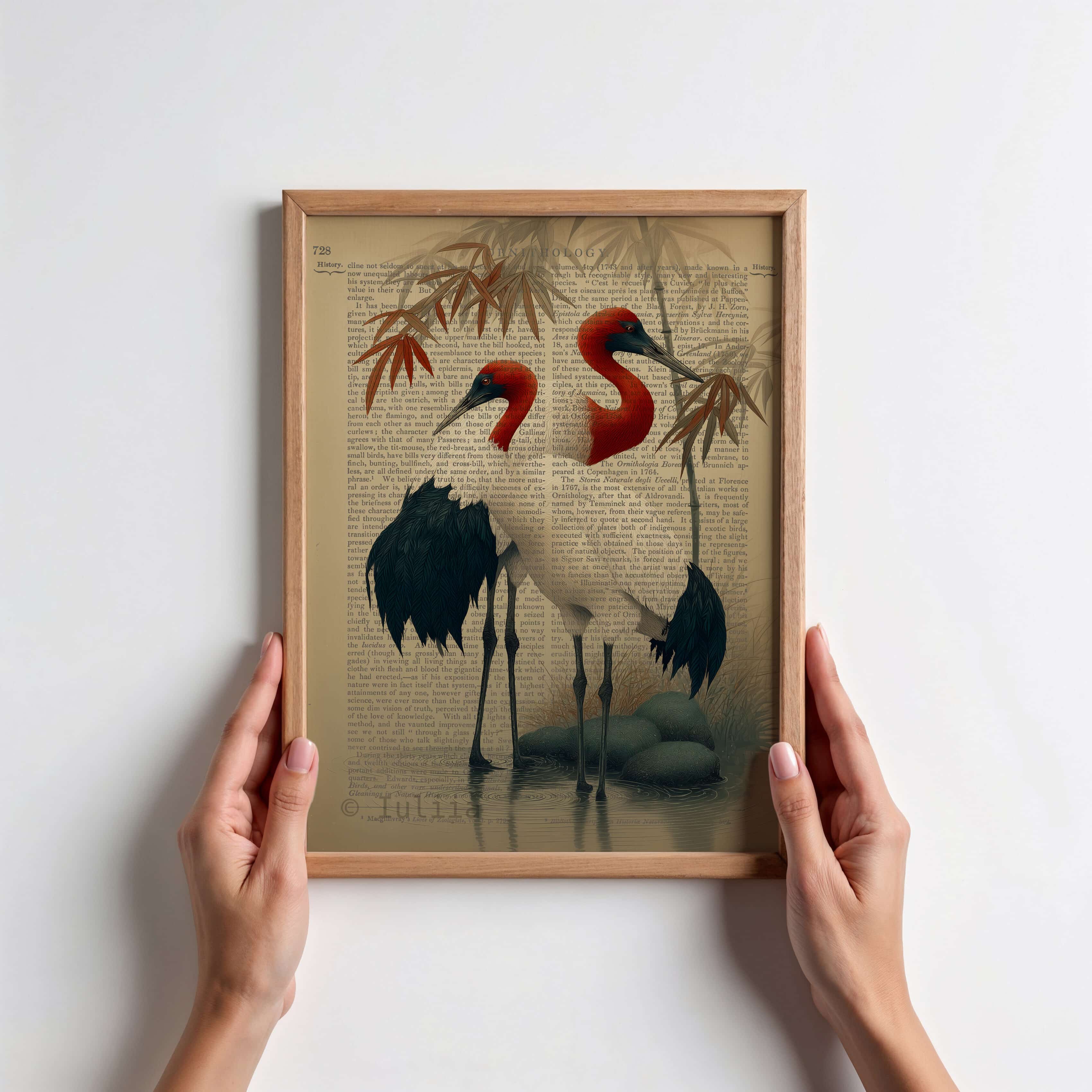
In Japan, the red-crowned crane — known as tsuru — represents longevity, good fortune, peace, loyalty, hope, and healing. These associations appear frequently in traditional literature, woodblock prints, and ceremonial art. Because cranes mate for life, they are also a symbol of devotion and harmony, which is why crane-themed art is often chosen for bedrooms or peaceful living spaces. In today’s interiors, homeowners prioritize emotional meaning over decoration for decoration’s sake, and the crane perfectly embodies that shift.
The popularity of Japanese crane wall art has surged due to several strong design trends. First, it fits perfectly into Japandi and Wabi-Sabi interiors, which emphasize simplicity, calm natural palettes, and visual balance. The soft shapes and flowing movement of cranes complement these philosophies effortlessly. Second, there is a widespread movement toward emotionally expressive décor: buyers want artwork that represents values such as hope, calmness, renewal, or strength. The crane symbol delivers this instantly, without being overly literal or decorative.
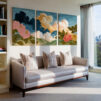
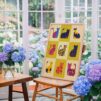
Another reason for the trend is versatility. Crane art works beautifully as minimalist prints in muted tones, as traditional ukiyo-e inspired illustrations with red suns and pine trees, as modern graphic compositions, or as colorful dopamine-style artwork. It also adapts exceptionally well to the triptych format. The tall, graceful posture of cranes creates a natural visual rhythm across a set of three prints or canvas panels, making it one of the most popular choices for large walls above sofas, beds, or sideboards.
When choosing crane artwork for your home, consider the mood you want to create. Soft neutrals are ideal for peaceful, grounding interiors. Traditional Japanese compositions with cranes, waves, mountains, or cherry blossoms work well for classic or Japandi spaces. Botanical crane prints bring romance and elegance, while bold maximalist styles can energize a modern living room. A triptych is the best option for large open walls, creating structure and balance without overwhelming the space.
Japanese crane art also works beautifully in many parts of the home. In bedrooms, it creates a feeling of harmony and protection. In living rooms, it serves as a sophisticated focal point. In reading corners, it adds calm, reflective energy, while in hallways it introduces elegant movement and flow. Offices often benefit from crane imagery as a symbol of focus, clarity, and patience.
If you’d like to explore meaningful Japanese artwork for your own home, visit the curated collections below:
Japanese crane art is more than a trend — it is a timeless symbol of peace, longevity, loyalty, and beauty. Its rise in modern home decor reflects a global desire for meaning, balance, and emotional connection within the spaces we live in. Whether you prefer traditional motifs, minimalist interpretations, or bold contemporary designs, crane artwork offers a refined and deeply symbolic way to transform your home.