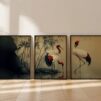


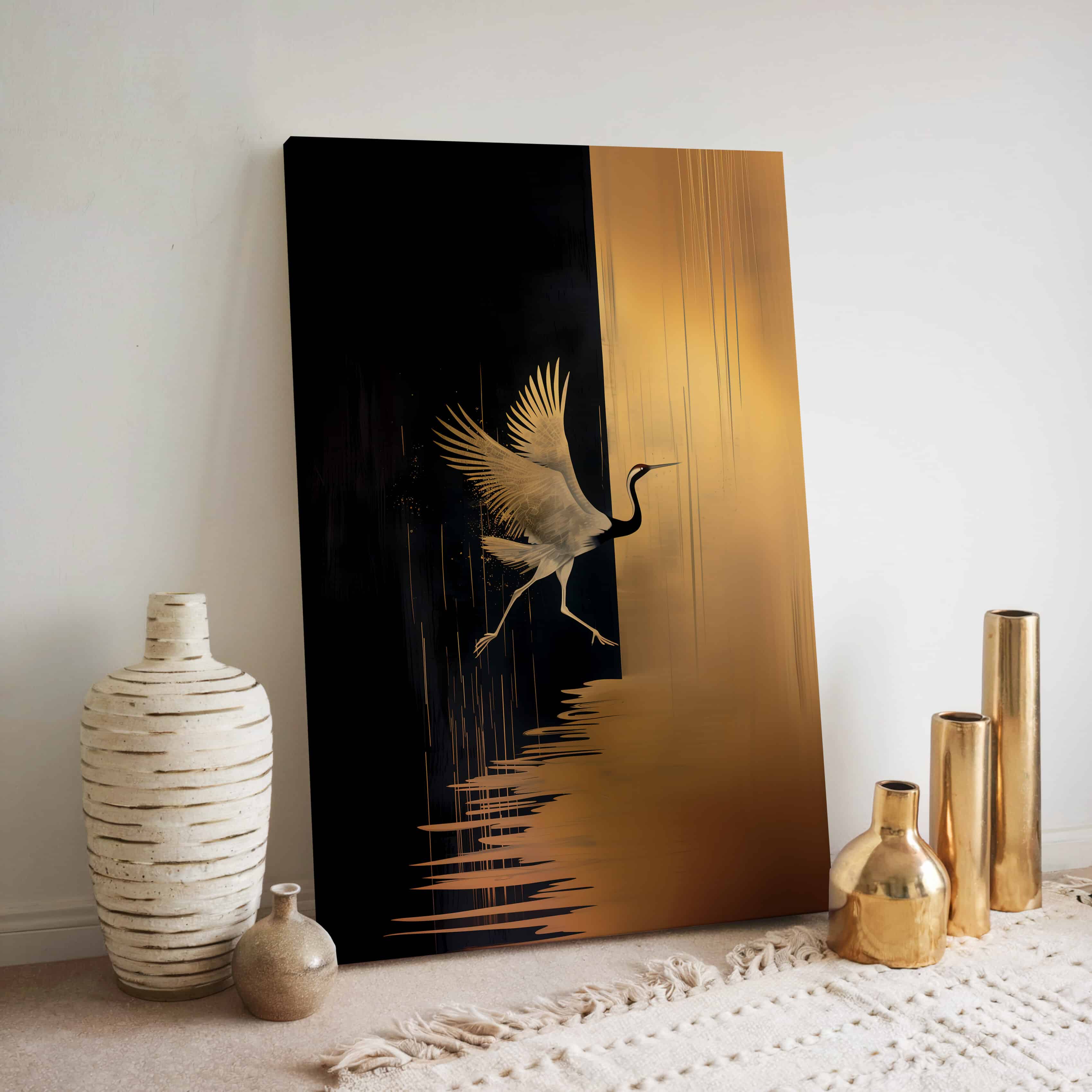
If you’ve been browsing interior inspiration lately, you’ve probably noticed one motif appearing again and again: the Japanese crane. From minimalist bedrooms to curated living rooms and Japandi-inspired spaces, Japanese crane art has quietly become one of the most recognizable visual symbols in modern home decor.
This isn’t a coincidence, and it isn’t just about aesthetics. The rise of crane imagery reflects a deeper shift in how people choose art for their homes — moving away from purely decorative pieces toward artwork with meaning, symbolism, and emotional resonance.
The Meaning of the Crane in Japanese Culture
In Japanese tradition, the crane is a powerful symbol associated with longevity, peace, good fortune, and resilience. Cranes are believed to live for a thousand years and are often linked to wishes for health, harmony, and enduring happiness. Because of this, they frequently appear in traditional art, textiles, and ceremonial imagery.
Unlike many decorative motifs, the crane is not ornamental by accident. Its presence carries intention. When depicted standing calmly, in flight, or paired with natural elements such as water, pine trees, or clouds, the crane represents balance between movement and stillness — a concept deeply rooted in Japanese aesthetics.
Why Japanese Crane Art Feels So Relevant Today
Modern life is visually loud and emotionally demanding. Screens, notifications, and fast-changing trends constantly compete for attention. In response, people are increasingly drawn to interiors that offer calm rather than stimulation.
Japanese crane wall art fits naturally into this shift. Its symbolism aligns with what many homeowners are seeking today: spaces that feel grounded, intentional, and emotionally supportive. Crane imagery does not overwhelm a room. Instead, it introduces a sense of quiet focus and visual breathing room.
This explains why crane art works so well in bedrooms, living rooms, home offices, and meditation spaces. It contributes to atmosphere rather than distraction.
The Role of Minimalism and Balance
Another reason crane art has become so widespread is its compatibility with modern interior styles. Whether the space is minimalist, Japandi, Wabi-Sabi, or contemporary, crane artwork adapts effortlessly.
The compositions are typically balanced, with clean lines, natural spacing, and restrained color palettes. This makes crane art ideal for interiors that value simplicity without emptiness — art that feels complete without being visually heavy.
Crane Art as Visual Storytelling
Unlike abstract prints or purely decorative patterns, crane artwork tells a quiet story. It suggests patience, endurance, and harmony with nature. In a time when people are consciously shaping their environments to support mental well-being, these narratives matter.
Displaying crane art is often less about trend-following and more about creating a personal sanctuary. It becomes a subtle reminder of stillness and continuity in a constantly shifting world.
Why Crane Art Keeps Appearing Across Interiors
The popularity of Japanese crane art is not driven by seasonal decor trends. It continues to appear because it fulfills a long-term need: meaningful design that does not age quickly.
As interiors move away from fast, disposable aesthetics, symbolic artwork like crane prints gains lasting relevance. It offers depth without excess and emotion without drama — qualities that make it suitable for homes designed to evolve over time.
Choosing Japanese Crane Art for Your Home
When selecting crane art, consider the feeling you want your space to evoke rather than focusing solely on size or color. A single crane print can act as a calming focal point, while a set of coordinated pieces can create rhythm and visual flow across a wall.
Whether placed above a bed, sofa, or workspace, crane artwork brings intention into the room — art that feels thoughtful rather than decorative.
Explore our curated collection of Japanese Crane Wall Art to discover designs inspired by traditional symbolism and adapted for modern living spaces.