

Selecting the perfect wall art is about more than choosing a beautiful design — size plays one of the most important roles in how artwork shapes the atmosphere of a room. Even the most stunning print or canvas can feel “off” if it’s too small, too large, or poorly placed in relation to your furniture. This guide will help you understand proportions, recommended measurements, and layout tips so you can confidently choose the right wall art size for any space in your home.
Why Wall Art Size Matters
Scale defines how your artwork interacts with the room. A piece that is too small may disappear visually, while an oversized one can feel overwhelming rather than intentional. When chosen correctly, wall art creates balance, anchors the space, and elevates your interior style — from minimal modern rooms to layered cozy environments.
Proper sizing also makes an artwork feel integrated into the room instead of “floating.” It ties together furniture, colors, and architectural details, transforming an empty wall into a curated design feature.
Standard Wall Art Sizes Explained
Most wall art falls into four main categories. Understanding these size groups helps you navigate what works best for different purposes:
- Small Art (20×30 cm / 8×12″) – Best for shelves, small corners, kitchen walls, and part of gallery arrangements.
- Medium Art (30×40–40×50 cm / 12×16″–16×20″) – Works well in entryways, bathrooms, offices, or as layered accents above desks and dressers.
- Large Art (50×70–60×90 cm / 20×28″–24×36″) – Ideal for bedrooms, living rooms, and areas above furniture.
- Oversized Art (70×100 cm / 28×40″ and bigger) – Perfect for statement areas, tall ceilings, or expansive walls.
How to Choose Wall Art Size Based on Furniture
Above a Sofa
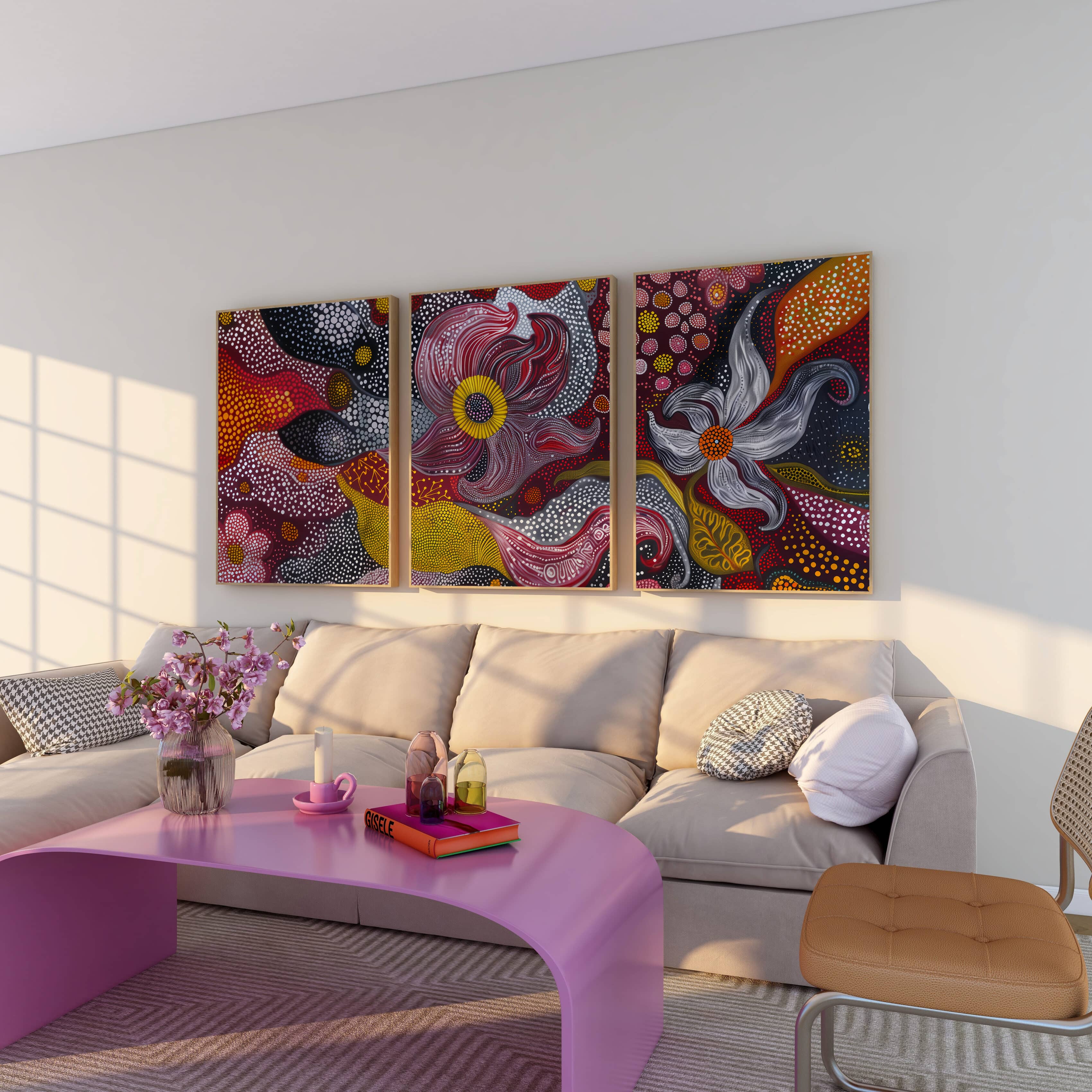
The artwork should be two-thirds to three-quarters the width of the sofa. This proportion feels naturally balanced to the eye. One large piece or a coordinated set of two or three works great here.
Above a Bed
A large horizontal print or a triptych set is ideal for bedroom walls. A single 60×90 cm piece creates calm symmetry, while two medium vertical prints add height.
Above a Console Table or Dresser
Medium-to-large vertical art adds a sense of elevation. If the furniture is wider, consider pairing one large piece with smaller accents on either side.
In Dining Areas
Large art works beautifully here because dining rooms often have minimal furniture on surrounding walls. Choose one oversized piece or a symmetrical set.
In Narrow Spaces & Hallways
Vertical artwork elongates hallways and corridor walls. Try 40×50 cm or 50×70 cm pieces placed in a row for a cohesive look.
The “60% Rule” for Empty Walls
If you don’t have furniture under your artwork, use the 60% rule: the art (or grouping) should occupy about 60% of the wall’s width. This prevents it from feeling lost in a large empty space.
Creating a Gallery Wall: Sizing & Layout Tips
Gallery walls allow you to combine multiple pieces of different sizes while maintaining harmony. To keep the layout visually appealing, follow these guidelines:
- Maintain equal spacing between artworks — typically 5–7 cm.
- Use one “anchor piece” (the largest artwork) as the visual starting point.
- Arrange the rest around it in a balanced but not necessarily symmetrical shape.
- Mix vertical and horizontal pieces to create movement.
To simplify the process, consider using curated sets like three-panel wall art that maintain perfect proportions.
When to Choose Oversized Art
A large statement piece creates impact unlike anything else. Oversized art is perfect for:
- feature walls in living rooms
- spaces with high ceilings
- minimalist interiors needing one bold focal point
- bedrooms with clean lines and soft neutral palettes
Our Japanese Crane collection and woven wall hangings work beautifully as oversized pieces due to their strong composition and high detail.
Mixing Different Sizes for a Curated Look
You don’t always need matching or symmetrical art. Mixing sizes can add visual interest and personality — especially in Castlecore, Dark Academia, and eclectic interiors.
Try pairing:
- one large focal canvas with two smaller botanicals
- a vertical piece next to a horizontal landscape
- a large artwork above three petite book-page prints
Collections such as Castlecore & Dark Academia prints work exceptionally well for layered, collected gallery styles.
Choosing the Right Orientation: Vertical vs Horizontal
Vertical artwork adds height and drama, while horizontal pieces create calm and stability. Match the orientation to your room’s architecture or the furniture under it:
- Vertical: great for small walls, corners, hallways, next to windows
- Horizontal: perfect above beds, sofas, or long consoles
Shop by Size at Iuliia.Store
Every artwork in our shop — from elegant cranes to dopamine florals, woven blankets, Castlecore botanicals and Aboriginal-inspired prints — is available in multiple sizes. You can select the exact dimensions that match your interior, whether you’re decorating a cozy nook or an open-concept living room.