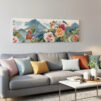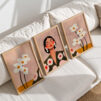


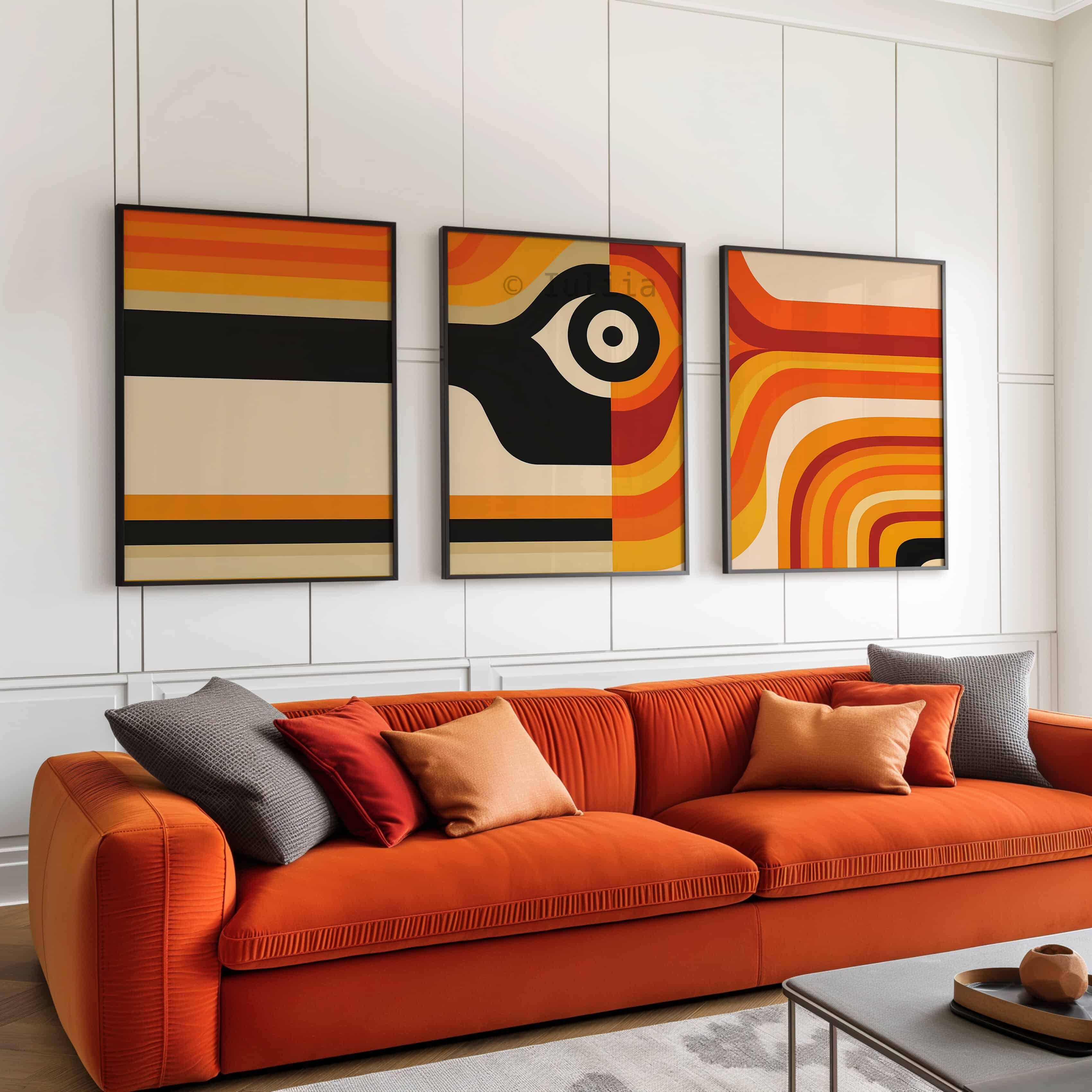
Bauhaus wall art remains one of the most enduring styles in modern interior design. While trends shift toward color, texture, and expression, Bauhaus continues to hold its place through clarity, structure, and balance.
In 2026, interiors are moving away from cold minimalism toward spaces that feel warm and intentional. Within this shift, Bauhaus art is evolving — not as a strict historical style, but as a modern tool for creating clean, visually grounded interiors.
What Defines Bauhaus Wall Art
Bauhaus art is built on simple geometric forms, structured compositions, and purposeful design.
Circles, lines, grids, and balanced asymmetry are key elements. The focus is not on decoration, but on how form and composition interact.
This clarity is exactly why Bauhaus continues to work in contemporary interiors — it provides visual structure without adding noise.
Why Bauhaus Works in Modern Interiors
Modern spaces often feature open layouts, clean furniture, and neutral color palettes. In these environments, wall art needs to support the architecture rather than compete with it.
Bauhaus wall art does this effectively by introducing structure and rhythm.
It creates a focal point without overwhelming the space, making it ideal for living rooms, offices, and minimalist interiors.
Even today, designers highlight Bauhaus for its ability to bring “clarity, creativity, and visual balance” into interiors :contentReference[oaicite:0]{index=0}.
The Evolution of Bauhaus in 2026
Traditional Bauhaus used strong primary colors and strict geometry. However, modern interpretations are more refined.
Instead of bold red, blue, and yellow, contemporary Bauhaus art often uses:
Muted tones, warm neutrals, and earthy palettes.
This shift aligns with broader interior trends where warm minimalism and natural tones are replacing cold, stark spaces :contentReference[oaicite:1]{index=1}.
As a result, Bauhaus art today feels softer, more adaptable, and easier to integrate into everyday interiors.
Large-Scale Bauhaus as Statement Art
Scale plays a major role in how Bauhaus art performs in a space.
Small geometric prints can feel generic and easily overlooked. In contrast, large-scale compositions create a strong visual anchor.
Oversized or panoramic Bauhaus artworks bring structure to wide walls while maintaining simplicity.
This aligns with one of the strongest 2026 trends — replacing gallery walls with single impactful pieces :contentReference[oaicite:2]{index=2}.
How to Style Bauhaus Wall Art
Bauhaus works best in interiors that allow space around the artwork.
Neutral walls, simple furniture, and minimal decor help emphasize the composition.
Wood, linen, and natural textures pair particularly well with geometric art, softening its structure and making the space feel more balanced.
Instead of adding multiple decorative elements, one well-placed piece can define the entire room.
Where Bauhaus Art Works Best
This style is especially effective in:
Living rooms with modern or Scandinavian furniture
Home offices that require a clean, focused atmosphere
Minimalist interiors where structure is needed
Bauhaus also works well in rental spaces or Airbnb interiors, where a neutral but stylish aesthetic is essential.
Conclusion
Bauhaus wall art remains relevant because it is based on principles rather than trends.
Through geometry, balance, and intentional composition, it brings clarity into modern interiors.
In 2026, its evolution toward softer colors and larger formats makes it more adaptable than ever.
For those looking to create a clean, structured, and timeless space, Bauhaus wall art offers a reliable and effective solution.